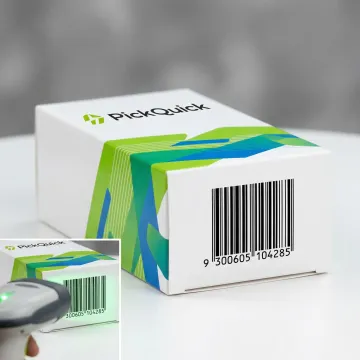
GS1 codes are globally unique identification numbers assigned to products, companies, and shipments. For Quick Commerce brands in India, the most relevant GS1 codes are GTINs (Global Trade Item Numbers) — specifically UPC-A (12-digit) and EAN-13 (13-digit) barcodes. These codes uniquely identify each product variant, enabling accurate scanning, inventory tracking, and catalog management across all QC platforms. GS1 India is the official issuing authority that assigns company prefixes and manages barcode registration for Indian businesses.
What are GS1 standards used for?
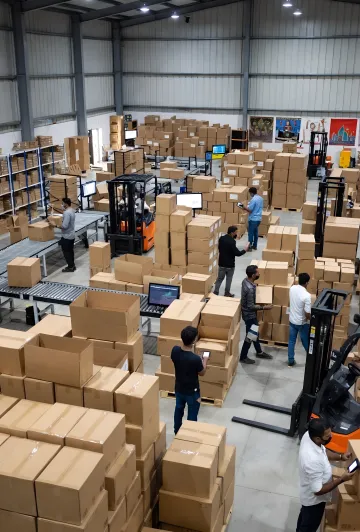
GS1 standards serve as the universal language for product identification and data exchange across supply chains worldwide. In Quick Commerce, GS1 standards enable dark store scanners to accurately identify products, prevent picker errors, synchronize inventory across motherhubs and dark stores, link products to catalog listings, process returns and discrepancies, and facilitate accurate GRN (Goods Received Note) and DN (Discrepancy Note) operations. Every major QC platform in India — Blinkit, Zepto, Instamart, and JioMart — requires GS1-compliant barcodes as a mandatory onboarding prerequisite.
What does it mean to be GS1 compliant?
GS1 compliance means your products carry valid, registered GS1 barcodes that meet global formatting and quality standards. For Quick Commerce brands, this includes: registering your company with GS1 India and obtaining a unique company prefix, generating GTINs (UPC/EAN codes) for every product SKU using your prefix, ensuring barcodes are printed with adequate contrast, correct quiet zones, and proper dimensions, verifying scanability through industry-standard testing, and maintaining accurate product data linked to each GTIN in platform catalogs. Non-compliant barcodes lead to listing rejections, scanning failures at dark stores, and operational delays.
How long does GS1 barcode registration take?
When managed independently, GS1 registration with GS1 India typically takes 2-4 weeks from application submission to company prefix assignment. However, PickQuick's streamlined process achieves complete GS1 registration, barcode generation, and platform readiness in 5-7 business days. We handle documentation, application processing, prefix assignment, GTIN generation, barcode artwork creation, and quality verification — delivering print-ready barcode files and compliance documentation that meet all Quick Commerce platform requirements. This acceleration eliminates weeks of back-and-forth and prevents common registration errors that delay approvals.
Do I need different barcodes for each Quick Commerce platform?
No. Once you have GS1-registered UPC or EAN barcodes, the same codes work across all Quick Commerce platforms in India — Blinkit, Zepto, Swiggy Instamart, and JioMart. GS1 standards are universally recognized, so a single barcode on your packaging enables listing and scanning across all channels. However, each platform has specific packaging compliance requirements regarding barcode placement, quiet zones, print quality, and accompanying product information. PickQuick ensures your packaging meets every platform's guidelines simultaneously, avoiding the need for platform-specific packaging variants.
What happens if my barcodes fail scanability tests at dark stores?
Failed scanability leads to significant operational problems: picker errors during order fulfillment, inventory mismatches between systems and physical stock, delayed or rejected GRNs at motherhubs, increased customer complaints due to wrong items delivered, potential delisting from poorly performing dark stores, and loss of expansion opportunities to new locations. PickQuick prevents these issues through pre-launch barcode quality testing using the same scanner technology deployed in QC dark stores. We verify symbol contrast, quiet zone adequacy, print resolution, and overall grade — providing remediation guidance before products reach any platform warehouse.
Can I use ISBN or internal SKU codes instead of GS1 barcodes?
No. Quick Commerce platforms in India strictly require GS1-registered GTINs (UPC or EAN codes) for all product listings. ISBN codes are exclusively for books and publications, while internal SKU codes lack global uniqueness and are not recognized by platform scanning systems. Attempting to onboard with non-GS1 barcodes results in immediate listing rejection. PickQuick's GS1 registration service ensures your products carry the correct, platform-accepted barcode format from day one, preventing compliance roadblocks during the onboarding process.
How does PickQuick help with ongoing GS1 compliance after launch?
PickQuick provides continuous GS1 compliance management as your Quick Commerce business scales. We handle new SKU barcode generation when you launch product variants, monitor and troubleshoot scanning issues reported by dark stores, manage GS1 prefix renewals and annual maintenance, update catalog mappings when GTINs change, coordinate barcode artwork revisions for packaging updates, and ensure compliance with evolving platform requirements across Blinkit, Zepto, Instamart, and JioMart. Our ongoing support prevents compliance gaps that could disrupt operations, delay expansion, or cause inventory discrepancies across your growing QC footprint.