What is a catalog management system?
A catalog management system is a platform or service that organizes, structures, and maintains product listings across one or more sales channels. It handles SKU creation, variant mapping, product descriptions, images, compliance data, and pricing — ensuring every listing meets channel-specific requirements and is optimized for search visibility and conversion. For Quick Commerce, this also includes pack-size alignment and platform-specific discoverability standards.
How is PickQuick different from catalog management software?
Unlike standalone software that gives you tools to manage catalogs yourself, PickQuick is a fully managed service. A dedicated team handles SKU mapping, listing creation, compliance checks, title optimization, and ongoing catalog health across Blinkit, Zepto, Instamart, and JioMart — so your brand gets expert execution, not just a dashboard to log into.
Which Quick Commerce platforms does PickQuick manage catalogs for?
PickQuick manages product catalogs across all four major Quick Commerce platforms in India: Blinkit, Zepto, Swiggy Instamart, and JioMart. Each platform has unique listing requirements, category structures, and compliance standards — PickQuick handles all platform-specific formatting so your listings are optimized for each channel individually.
How long does it take to get my catalog live on Quick Commerce platforms?
PickQuick's Fast Onboarding Service gets brands live in weeks rather than months — achieving 3–5x faster go-live compared to traditional onboarding. Before inventory reaches the platform, PickQuick completes packaging compliance, barcode and GS1 readiness, professional product imaging, catalog creation, Seller Hub setup, and replenishment planning so brands are scale-ready from Day 1.
What does SKU mapping involve for Quick Commerce platforms?
SKU mapping for Quick Commerce includes creating platform-compliant product entries with the correct brand name, product name, variant, pack size, MRP, selling price, landing price, dimensions, gross weight, category mapping, shelf life, ingredient list, FSSAI details, HSN code, and GST. It also covers image requirements — front of pack, back of pack, picker image, and barcode image — and ensures every listing meets search and discoverability standards for each platform.
Can PickQuick manage catalogs for brands in multiple product categories?
Yes. PickQuick manages catalogs across a wide range of categories including food and FMCG, dairy, masala and spices, staples, snacks, beverages, personal care, and everyday self-care brands. The team brings category-specific expertise — for example, masala listings are optimized with regional terms, cuisine cues, intensity indicators, and region-specific keywords to drive discovery and conversion.
How does PickQuick ensure catalog listings stay healthy and up to date?
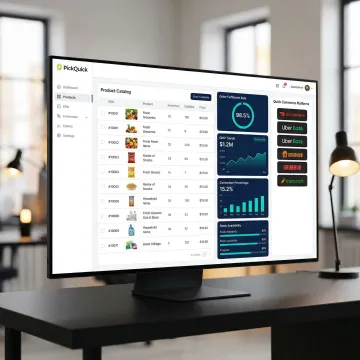
PickQuick performs ongoing listing health checks as part of its Daily Operations Management service. This includes monitoring listing status, flagging rejected or suppressed SKUs, updating pricing, ensuring compliance with platform policy changes, and coordinating with platform teams to resolve issues promptly. Real-time dashboards track availability and performance so catalog gaps are identified and corrected before they impact sales.
Do I need to manage inventory separately from my catalog?
No. PickQuick integrates catalog management with inventory and replenishment operations through its Quick Commerce Control Tower. Real-time stock tracking, automated PO processing, dark store replenishment management, and Min-Max optimization are all handled together — ensuring your catalog listings are always backed by the right inventory at the right dark store at the right time.