Introduction
Brands on Quick Commerce platforms like Blinkit, Zepto, and Swiggy Instamart face a painful disconnect: they're spending heavily on in-app ads, yet ROAS remains inconsistent, conversion rates fluctuate wildly, and budgets drain without clear visibility into what's working. Many brands chase impressions or click-through rates, only to discover those metrics mean nothing when stockouts kill conversion.
Ad campaign optimisation on QC platforms demands a fundamentally different approach than traditional digital advertising. When the gap between ad exposure and purchase collapses to under 10 minutes, availability, targeting precision, and continuous refinement become the only levers that matter.
This article covers 8 strategies designed to help brands maximise every rupee of ad spend across Blinkit, Zepto, Swiggy Instamart, and JioMart.
Key Takeaways
- Optimise for QC-specific metrics — platform ROAS and conversion rate — not vanity numbers like impressions
- Never run ads on out-of-stock SKUs—availability directly determines campaign success
- Target at pincode and category level to match hyperlocal demand patterns
- Reallocate budgets weekly toward platforms, pincodes, and SKUs consistently hitting above-average ROAS
- Build a structured review cadence to test creatives, identify winners fast, and scale them before competitors catch up
What is Ad Campaign Optimization on Quick Commerce?
QC ad campaign optimization is the ongoing process of adjusting targeting, creatives, bids, listings, and budget allocation across Quick Commerce platforms to maximize return on every rupee of ad spend. Unlike traditional e-commerce where days separate ad exposure from purchase, QC collapses that journey entirely: conversions happen within minutes of a user seeing an ad, often in a single session lasting under 10 minutes.
What makes QC advertising fundamentally different:
- Hyper-local competition: A product fully stocked in one neighbourhood's dark store can be completely absent three kilometres away — city-level strategy doesn't apply here.
- Inventory-led ad delivery: If a SKU isn't physically present in the dark store serving a specific pincode, the ad won't surface regardless of budget or bid.
- Availability as a performance lever: Listing quality and in-stock rates have a direct multiplier effect on campaign returns — no amount of spend fixes a stockout.
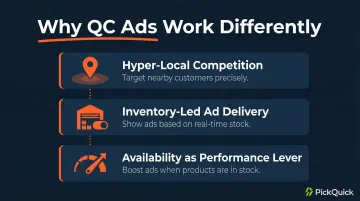
These constraints mean that optimization on QC starts before the first rupee is bid — with catalog health, pincode-level availability, and dark store readiness.
Strategies 1–3: Build the Right Foundation Before Spending
Strategy 1: Align Campaign Goals with Quick Commerce Business Metrics
The biggest risk in QC advertising is optimising for the wrong signal. Many brands chase impressions or click-through rates, ignoring the metrics that actually drive profitability: add-to-cart rates, conversion rates, and platform ROAS.
Platforms like Zepto and Swiggy Instamart frequently calculate ROAS using Maximum Retail Price rather than actual selling price, artificially inflating reported returns by up to 47%. Brands that optimise based on these inflated numbers burn budget without realising their true margins are underwater — this is the MRP ROAS trap most regional brands don't catch until it's too late.
Set SMART Goals Specific to QC:
- Improve sponsored search conversion rate by 15% within one quarter
- Achieve a blended ROAS of 4x–6x on a specific product category
- Increase add-to-cart rate from 2% to 3.5% on hero SKUs
- Reduce cost per order by 20% through better targeting
Match Ad Formats to Objectives: Each platform offers distinct formats aligned with specific goals. Blinkit's Product Boosters capture active search intent, while Sponsored Brand Banners build visibility. Zepto's "Swap and Save" format intercepts consumers at checkout, conquesting competitor purchases when intent is highest.
Strategy 2: Fix Availability and Coverage Before Running Any Ads
Running ads for SKUs with low stock or poor pincode coverage wastes budget and trains platform algorithms negatively. A user who clicks but can't order represents lost ad spend and damages your quality score.
QC platforms operate on an inventory-led ad model — ads only show in pincodes where the product is physically present in the nearest dark store. Weekend out-of-stock rates can hit 40–60% across platforms, especially in dairy, snacks, and beverages. Running ads during those windows wastes spend and damages algorithmic ranking simultaneously.
Audit Availability Before Campaigns Go Live:
- Check stock levels across dark stores serving your target pincodes
- Identify pincodes where your brand has weak coverage or frequent stockouts
- Pause ad spend in areas with fulfillment gaps until coverage stabilises
- Track fill rates by SKU and location — Blinkit expects brands to sustain fill rates above 90%
Brands working with an end-to-end QC operator like PickQuick get real-time availability tracking and clean replenishment systems — so ads run only when products are reliably in stock across target locations. Scaling ad spend while availability is shaky is one of the most expensive mistakes regional brands make on QC platforms.
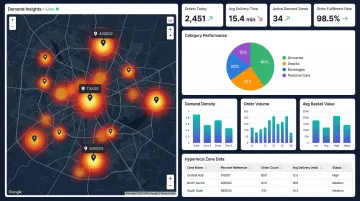
Strategy 3: Use Platform Analytics and First-Party Data to Understand Your Buyers
Getting availability right sets the stage for smarter spending. The next step is using the data these platforms already give you — purchase histories, search term reports, and category performance insights — to make targeting and creative decisions based on evidence, not assumptions.
Each major platform offers distinct analytics access:
- Blinkit Seller Hub: Free keyword analytics showing city-wise search trends, search conversion percentages, and most-bought products per keyword
- Zepto Atom: Subscription-based (around ₹30,000/month) with hyperlocal, pincode-by-pincode market share data and heatmap-style demand insights
- Swiggy Instamart Ads Manager: Real-time metrics including impressions, clicks, conversions, ROAS, and audience insights
Put that data to work across four decisions:
- Identify which SKUs drive repeat purchases in specific pincodes
- Discover which pincodes show the highest basket value
- Find which time slots have peak conversion rates
- Track which search terms convert best for your category
A cold beverage brand used Zepto Atom to identify rising afternoon demand for flavoured sodas in Bangalore tech parks. By adjusting distribution and running targeted ads between 1–3 PM, they achieved a 22% sales spike in those zip codes within one week.
Strategies 4–5: Target Smarter and Spend More Efficiently
Strategy 4: Go Granular — Target at the Pincode and Category Level
Regional consumer demand varies sharply across cities and even neighbourhoods on QC platforms. A masala brand may dominate in Tier 1 South Indian cities but have low awareness elsewhere. Pincode-level targeting allows brands to concentrate ad spend where intent is strongest.
QC platforms operate on dark store networks serving specific pincodes within a 2–3 km radius. A product in stock at the Andheri dark store may be out of stock at the Bandra dark store. City-level campaigns average out these variations — and bury the signals that actually tell you where to spend.
Category-Level Sponsorships and Search Targeting:
- Bid on high-intent category searches (e.g., "turmeric powder 200g," "sambhar masala")
- Prioritise SKUs with strong organic performance before scaling ad spend
- Avoid broad awareness spends in low-converting regions
- Target "top of cart" over "top of mind" — generic category terms intercept consumers before brand preference forms
Time-Band Bidding for Intent Spikes: Consumer intent shifts sharply throughout the day. Breakfast category searches spike 6–9 AM, while evening snacks peak 5–7 PM. Bidding at the same intensity all day is inefficient—concentrate spend where intent concentrates.
Layered Targeting Approach:
- Start with best-performing pincodes where you have strong availability
- Expand to adjacent areas as ROAS stabilises above target thresholds
- Use lookalike demand patterns from existing sales data to identify next target zones
- Monitor dark store inventory before expanding geographic reach
Strategy 5: Consolidate and Reallocate Budgets Based on Real Performance Data
Granular targeting generates the performance data that makes budget decisions clear. The common mistake is ignoring it — spreading budget equally across platforms, SKUs, and regions without checking which combinations actually drive revenue. This dilutes algorithmic learning and produces mediocre results everywhere.
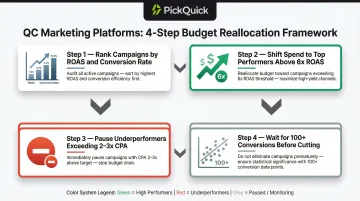
A functional budget allocation framework looks like this:
- Rank campaigns by ROAS and conversion rate weekly
- Shift spend to top performers (ROAS above 6x)
- Pause underperformers that exceed 2–3x target cost per acquisition without conversion
- Set minimum spend thresholds (at least 100 conversions) before making decisions—avoid cutting campaigns before sufficient data accumulates
Platform Entry Costs Vary Significantly:
| Platform | Minimum Spend | Model |
|---|---|---|
| Blinkit | ₹25,000 listing fee per SKU per state (returned as ad credits) | Seller-led, self-serve |
| Zepto | ₹5–6 lakh bundled entry package | Vendor model |
| Swiggy Instamart | ₹8–10 lakh quarterly brand pack | Bundled quarterly |
For new brands on Blinkit in Trial or early Level 1, put 90% of ad budget into Product Boosters to build sales velocity, which builds organic search ranking.
Managing campaigns across multiple QC platforms in silos is where most brands lose ground — each platform gets optimised independently, and cross-platform signals never connect. Working with a full-service QC operator like PickQuick consolidates budget visibility across Blinkit, Zepto, and Swiggy Instamart into a single quarterly plan, with pooled spend that carries more weight in platform negotiations than fragmented individual accounts.
Strategies 6–7: Optimize What Users Actually See
Strategy 6: Improve Product Listings and In-App Ad Creatives Before Scaling Spend
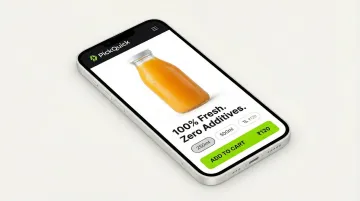
QC ads send users directly to product detail pages. If the listing has a weak hero image, unclear weight/variant information, few reviews, or uncompetitive pricing, even a high-quality ad will fail to convert. Fix the destination before scaling the traffic.
Strong QC Listing Requirements:
- High-resolution product images that match the ad's visual promise
- Clear front-of-pack and back-of-pack shots showing ingredients and nutritional information
- Concise benefit-led copy highlighting key product attributes
- Clear variant selection to reduce decision friction
- Competitive pricing relative to offline alternatives
Poor catalog preparation—wrong HSN codes, missing images, or unclear pack size descriptions—leads to listing rejections or low search visibility even after approval.
What Strong QC Ad Creatives Look Like:
- Urgency triggers: bundle offers, limited-time deals, "ends tonight" messaging
- Clean product photography with minimal background distractions
- Clear weight/quantity callouts visible in the creative itself
- Benefit-forward messaging ("Organic," "No Preservatives," "Ready in 2 Minutes")
Better listings don't require more ad spend—they make every rupee already in the budget work harder.
Strategy 7: Run Coordinated but Platform-Specific Campaigns Across QC Apps
Each QC platform has a different user base, ad format, and buying behaviour. Blinkit skews toward urban convenience buyers, Swiggy Instamart toward food-adjacent categories, Zepto toward younger metros. A single campaign copy-pasted across all platforms will underperform.
Platform Strengths and Signature Formats:
| Platform | Core Strength | Signature Ad Format |
|---|---|---|
| Blinkit | Data-driven, systematic level progression | Product Booster (keyword search) |
| Zepto | Speed, younger demographic, aggressive ads | Swap and Save (cart interception) |
| Swiggy Instamart | Food ecosystem cross-sell | Item Boosts (Last-Minute Add-Ons) |
Adapt Campaigns by Platform:
- Customise product prioritisation by platform's category strengths
- Adjust bidding based on platform-specific CPCs (Blinkit ₹2–15, Zepto ₹5–12, Instamart ₹3–10)
- Tailor promotions—bundle deals on Zepto vs. bulk packs on JioMart—to match platform user intent
- Activate platform-specific formats like Zepto's "Swap and Save" for competitor conquesting at checkout
A staggered launch—starting with Blinkit, then adding Zepto and Instamart—lets brands build operational confidence before spreading ad budgets across all three.
Strategy 8: Build a Consistent Review, Test, and Scale Cadence
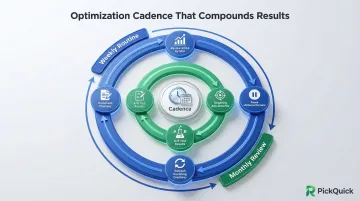
Continuous optimization matters more than one-time setup. QC platform algorithms shift, competitor brands increase bids, seasonal demand spikes, and SKU availability changes. Campaigns left unattended become expensive and inefficient quickly.
Weekly Optimization Routine:
- Review ROAS and conversion rate by platform and SKU
- Pause underperformers that exceed 2–3x target CPA without conversion
- Refresh ad creatives showing declining CTR (creative fatigue typically appears when CTR drops 50%+ over 7 days)
- Document all changes to build a performance log for future reference
Structured A/B Testing Approach:
- Test one variable at a time: headline A vs. headline B, image variation, discount offer vs. bundle offer
- Let each test run long enough to gather statistically meaningful order data (minimum 100 conversions) before declaring a winner
- Rotate winning creatives proactively to prevent ad fatigue
- Track CPM increases above 150% as signals for immediate creative refresh
Bidding Controls and Data Timing:
- Use Blinkit's Bid Booster feature to automatically increase bids up to 50% when competitors try to outbid you — but switch to manual bids during festive windows where precise control matters
- Account for Blinkit's 24-hour data lag — intraday optimization isn't possible, so build review cycles around complete daily data rather than real-time snapshots
Brands that run consistent weekly reviews, structured tests, and disciplined bid management compound performance gains over time — turning ad spend into a predictable growth lever rather than a cost to manage.
Frequently Asked Questions
What metrics should I track to measure ad campaign performance on Quick Commerce platforms?
Focus on platform ROAS (calculated using actual selling price, not MRP), sponsored listing conversion rate, cost per order, and add-to-cart rate. Impressions alone don't indicate campaign health; they measure visibility, not orders or profitability.
Why are my Quick Commerce ads getting clicks but not converting to orders?
Low conversion after clicks usually points to one of three issues: product out of stock in the user's pincode, a weak product listing that doesn't build purchase confidence, or a mismatch between the ad's promise and the product page's information or pricing.
How much should a brand spend on ads on Blinkit or Zepto?
Calibrate budgets to your current sales volume and target ROAS. Most brands start at ₹50,000–₹1,00,000 per month per platform, targeting a blended ROAS of 4x–6x to remain profitable on Indian QC platforms.
Does product availability really affect how QC ads perform?
Yes — it's one of the most direct levers on performance. Out-of-stock SKUs waste ad spend and damage quality scores, while consistent availability drives higher conversion rates from the same budget.
Should I run the same ad campaign across Blinkit, Zepto, and Swiggy Instamart?
No—avoid copy-pasting campaigns across platforms. Each platform has different user intent, ad formats, and category strengths that require tailored budget allocation, creative, and SKU prioritisation. Customise campaigns to match each platform's unique audience and competitive dynamics.
How often should I review and optimize my QC ad campaigns?
Run weekly reviews for metrics and budget adjustments, and a monthly review for creative and targeting tests. During peak seasons, new launches, or pincode expansion, increase review frequency accordingly.