Most brands invest heavily in platform onboarding but overlook the critical levers that determine whether a listing converts. Poor-quality images, inconsistent stock availability, and weak category positioning silently kill thousands of potential sales every day. This guide covers 20 actionable strategies to fix those problems—organized into four focus areas specifically for brands selling on India's Quick Commerce platforms.
Key Takeaways
- Conversion rate on QC platforms tracks how many shoppers who view your listing actually buy — even a 5-10% lift compounds into meaningful monthly revenue at scale
- The 20 strategies span listing quality, availability management, pricing signals, and operational discipline — each targeting a distinct drop-off point in the purchase funnel
- Stock availability is the highest-impact conversion driver that most brands underestimate
- Brands that nail operational basics — zero stockouts, reliable delivery windows, sharp pricing — outperform competitors who over-invest in ads while ignoring availability
What Is a Conversion Rate on Quick Commerce Platforms?
Quick Commerce conversion rate measures the percentage of users who view a product listing and complete a purchase. Unlike traditional e-commerce, QC platforms compress the entire funnel—search → listing → add to cart → checkout—into a single 60-second flow.
This compression changes buyer behaviour. 75% of online grocery shoppers report increased impulse purchases since adopting Quick Commerce, with QC apps driving 44% of impulse buying—beating traditional online grocery (33%) and even Kirana stores (17%).
Why QC conversion rates differ from e-commerce:
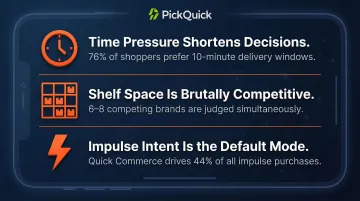
- Time pressure shortens decisions. 76% of shoppers prefer 10-minute delivery over next-day scheduled delivery, so availability and speed outweigh research.
- Shelf space is brutally competitive. A search for "coriander powder" surfaces 6-8 brands simultaneously—all judged on image quality, price, reviews, and delivery time within a tiny thumbnail.
- Impulse intent is the default mode. Unlike search-led e-commerce, QC shoppers often add items they didn't plan to buy, making first-impression listing quality critical.
These dynamics produce conversion patterns that diverge from standard benchmarks. Global e-commerce averages 1.6% to 1.9% conversion rates, but high-frequency FMCG items—dairy, staples, masala—regularly exceed this on QC platforms due to impulse intent. Lower-frequency categories track closer to standard rates. Platform-level data remains proprietary, yet category leaders consistently pull ahead through operational discipline: clean availability, fast replenishment, and optimised listings.
Strategies 1–5: Optimize Your QC Listing for Maximum Discoverability
Strategy 1: Use High-Quality Product Images
On a mobile QC app, your thumbnail image is the first—and often only—visual a shopper sees before deciding to click. Blurry, dark, or generic packaging shots kill discoverability instantly.
Image requirements across platforms:
- Shoot at minimum 1000x1000 pixels in JPEG or PNG format
- Use a plain white or neutral background to keep focus on the product
- Include front of pack, back of pack, ingredients panel, and nutritional information
- For Blinkit specifically: add picker images (first layer of packaging) and barcode images for inwarding
Test how your listing appears at thumbnail scale on an actual phone screen before uploading. What looks sharp on a laptop often becomes illegible when compressed to mobile size.
While AI-generated lifestyle imagery increased click-through rates by 40% for one fashion retailer, QC platforms prioritize clarity and product authenticity. Show the actual masala colour, packaging details, and usage cues—not stylized marketing shots that obscure product information.
Strategy 2: Write Keyword-Rich Titles and Descriptions
QC search algorithms rank listings based on keyword relevance in the product title. A title like "Goldie Masala – Coriander Powder 200g" outperforms "Coriander Powder" because it captures both branded searches (users loyal to Goldie) and generic searches (users comparing options).
Effective title structure:
- Brand name + product type + variant/intensity + pack size
- Example: "Prakash Masala – Kolhapuri Chicken Masala Spicy 100g"
- Avoid: Generic titles missing regional cues or pack size clarity
Descriptions should answer key questions upfront: quantity, ingredients, certifications (FSSAI), and usage cues. Don't bury critical information in lengthy paragraphs that require scrolling. According to MMA Global's Quick Commerce Playbook India 2025, shoppers on QC platforms decide within seconds — your key selling points need to appear in the first two lines, not buried below the fold.
Strategy 3: Select the Right Category and Subcategory
Wrong category placement increases impressions from unqualified browsers and drops your conversion rate. A premium ghee listed under "Cooking Oil" instead of "Dairy & Ghee" attracts shoppers looking for budget vegetable oil—who won't convert.
Find the most specific relevant category and subcategory on each platform. Blinkit, Zepto, and Swiggy Instamart use different taxonomies, so category mapping must be platform-specific.
Platform taxonomy differences to watch:
- Blinkit: Uses granular subcategories; "Ghee & Butter" sits separately from "Cooking Oils"
- Zepto: Groups dairy differently — confirm placement matches your product's primary use case
- Swiggy Instamart: Category labels often differ from Blinkit equivalents for the same SKU
Common rejection reasons on Blinkit include wrong product category and missing attribute values. Clean category placement prevents these rejections and improves organic search ranking.
Strategy 4: Keep Product Information Complete and Accurate
Incomplete listings reduce purchase confidence and platform visibility. Missing weight, incorrect MRP, or mismatched product names signal poor quality control to both shoppers and algorithms.
Mandatory listing elements:
- Verify brand name, product name, variant, and pack size match across all platforms
- Confirm MRP, selling price, and landing price are consistent and current
- Include dimensions, gross weight, and shelf life — platforms flag missing logistics data
- Add ingredient list, FSSAI licence number, HSN code, and GST classification before going live
QC platforms deprioritize incomplete listings in search results. Run a full field audit before each platform launch — a single missing attribute can suppress a listing from category search entirely.
Strategy 5: Price Competitively Within the Platform
QC shoppers see multiple brands on the same screen. Pricing too high versus category norms kills conversion; pricing too low erodes perceived quality for premium products.
How to benchmark:
- Research category averages on each platform
- Compare price per unit (₹/100g) across competitors
- Test price elasticity through controlled adjustments
- Monitor conversion rate changes after pricing shifts
For premium categories like ghee or cold-pressed oils, pricing 10–15% above the category median is sustainable — provided your images and description justify the gap. For high-frequency staples, staying within ₹5–10 of the category median typically maximises conversion volume.
Strategies 6–10: Build Trust and Drive Purchase Intent
Strategy 6: Collect and Actively Manage Customer Ratings
Star ratings function as primary trust signals on QC platforms. Products with 1-10 reviews see 52.2% higher conversion compared to products with zero reviews (general e-commerce data).
Encourage buyers through packaging inserts or post-purchase messages to leave reviews. Address negative reviews promptly—responses show active brand management and build credibility with future shoppers.
Strategy 7: Use Platform Banners and Promoted Listings for Visibility
Promoted placements put your product in front of high-intent shoppers at the moment of need. Increased visibility feeds more conversions, and well-converting listings earn better organic rankings over time—compounding your growth as rankings and sales reinforce each other.
Each major QC platform offers distinct ad formats worth knowing:
- Blinkit: Product Booster (search), Sponsored Brand Banners
- Zepto: Swap and Save (cart interception), Sponsored Products
- Swiggy Instamart: Keyword Ads, Banner Ads, Brand Packs
Brands managing Quick Commerce through operators like PickQuick consolidate ad budgets across portfolios, enabling larger negotiated spends and premium placements individual brands cannot achieve independently.
Strategy 8: Run Flash Deals and Limited-Time Offers
Urgency converts fence-sitters. Time-limited discounts, combo deals, or "today only" pricing prompt shoppers to act rather than abandon.
Set discount levels strategically—impulse purchases shouldn't erode profitability. Use flash deals to clear aging inventory, introduce new SKUs, or compete during high-traffic events like category sales:
- Clear slow-moving stock before expiry windows tighten
- Drive trial for new SKU additions without permanent price cuts
- Compete aggressively during platform-wide sale events
Strategy 9: Leverage Brand Recognition Signals
For regional brands with strong offline presence, the brand name itself drives conversion. Ensure brand identity is prominent in listing images and titles.
If your brand holds certifications, awards, or is dominant in a state market, reflect that credibility in listing copy. A masala brand dominant in Maharashtra for 40 years should mention "Maharashtra's Favourite Since 1980" to capitalize on existing trust.
Strategy 10: Ensure Accurate Delivery Time Estimates
Shoppers choose QC specifically for speed. If your product shows longer delivery estimates than alternatives, it costs you the sale.
Delivery time accuracy depends on dark store coverage and stock placement. Having inventory in the right dark store, closest to high-demand pincodes, keeps delivery promises fast and credible.
Blinkit reports an average delivery time of 12.5 minutes, with ~75% of orders delivered within two minutes of the promised time.
Strategies 11–15: Reduce Friction at the Point of Purchase
Strategy 11: Maintain Near-100% Stock Availability
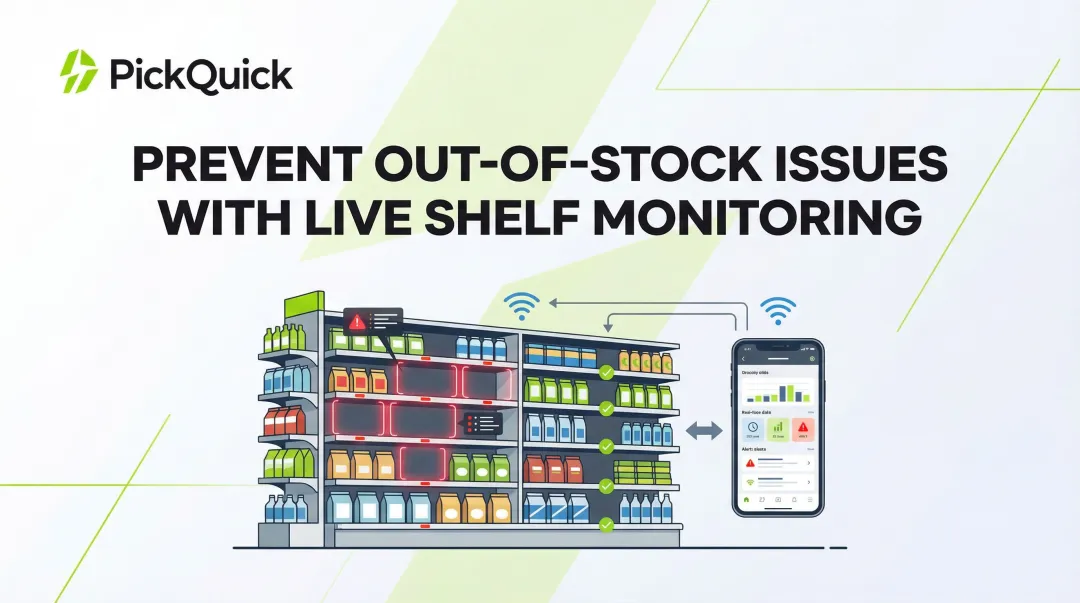
Stock availability is the single biggest conversion driver that brands underestimate. An out-of-stock listing either disappears from search or shows "unavailable"—in both cases, conversion drops to zero.
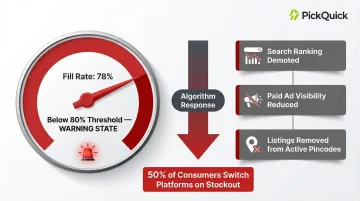
50% of consumers switch to another QC platform when their preferred brand is out of stock, rather than substitute with a competitor on the same app. You don't just lose one sale—you lose the customer entirely.
Min-Max inventory optimization is critical. Every dark store has minimum and maximum thresholds for each SKU. When stock hits minimum, replenishment triggers automatically. Maximum levels expand only when brands demonstrate zero stockouts and clean operational records.
When fill rates drop below 80%, Blinkit's algorithm demotes search ranking, reduces paid ad visibility, and removes listings from active pincodes. Availability isn't just a sales metric—it's a platform ranking signal.
Operators like PickQuick manage this through predictive supply modeling and real-time pincode-level availability tracking across 10,000+ pincodes. The goal: stock at the right dark store before demand spikes, not after a stockout surfaces.
Strategy 12: Offer Strategic Discounts and Coupons
Platform coupons reduce perceived price and push undecided shoppers to convert. Structure mechanics carefully: flat ₹X off works for high-value items, percentage discounts work for bundles.
Use coupons tactically—during low-velocity periods or to counter rival promotions—rather than as a permanent fixture. Consistent discounting trains buyers to wait for deals and erodes margins over time.
Strategy 13: Bundle Products to Increase Add-to-Cart Value
Bundling complementary SKUs increases average order value and improves conversion through better perceived value. Masala combo packs, dairy + bread bundles, or snack multipacks simplify decision-making.
Identify natural pairings using platform purchase co-occurrence data. Blinkit, Zepto, and Instamart dashboards show which products shoppers buy together—that data should drive your bundle structure, not guesswork.
Strategy 14: Enable and Highlight Multiple Payment Options
Indian QC shoppers pay across multiple modes. Make sure your listings support all of them:
- UPI and digital wallets — dominant across urban pincodes
- Credit/debit cards — critical for higher-value orders
- COD — still drives significant demand in Tier 2 pincodes and older demographics
If COD is inadvertently restricted in certain areas, you're losing committed shoppers at the final step. Payment friction at checkout is one of the easiest conversion problems to fix—and one of the most commonly overlooked.
Strategy 15: Reduce Listing-Level Confusion with Variant Clarity
If a product comes in 100g, 200g, and 500g sizes, unclear variant labeling causes shoppers to hesitate or pick the wrong SKU—leading to returns or abandonment.
Each variant needs a distinct, clearly labeled listing with appropriate pricing. Avoid duplicate listings that split your own conversion rate. Clean variant management prevents returns and keeps shoppers from abandoning at the wrong SKU.
Strategies 16–20: Use Data, Operations, and Platform Tools to Scale
Strategy 16: Track Your Search-to-Cart Conversion Funnel on Each Platform
Most QC platforms provide seller dashboards with impression, click, and conversion data.
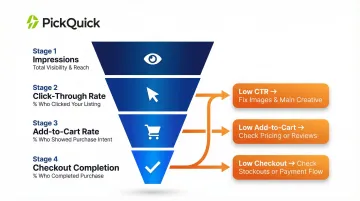
Key metrics to monitor:
- Impressions: How many times your listing appeared in search or browse
- Click-through rate (CTR): Percentage of impressions that generated clicks
- Add-to-cart rate: Percentage of clicks that added product to cart
- Checkout completion rate: Percentage of carts that completed purchase
Blinkit's Seller Hub provides city-wise search trends and search conversion percentage, showing sales from keyword searches and most-bought products.
Identifying exactly where drop-off happens tells you which strategies to prioritize. Low CTR? Fix images. High CTR but low add-to-cart? Check pricing or reviews. High add-to-cart but low checkout? That usually points to stockouts or a broken payment flow.
Strategy 17: Use Pincode-Level Demand Data to Optimize Assortment
Conversion rates vary by geography. A masala popular in South India may see low conversion in North India due to taste preferences.
Tracking pincode-level price inconsistencies improved regional profitability by 12% in one quarter for one FMCG brand. An FMCG brand replaced low-selling chips with spicy variants in South Mumbai using Zepto Atom data, achieving 15% sales increase in that pincode cluster.
Use platform pincode or city-level data to guide assortment decisions — stocking only the right SKUs in the right dark stores improves both availability and conversion relevance.
Strategy 18: A/B Test Listing Images, Titles, and Pricing
QC platforms increasingly allow merchants to test listing asset variations. Run controlled tests — one variable at a time — for at least 2–3 weeks to get meaningful results.
Test systematically:
- Hero image variations (pack shot vs. lifestyle)
- Title formats (brand-first vs. product-first)
- Pricing structures (₹99 vs. ₹100, or bundle vs. individual)
Track conversion rate changes for each variation and adopt winners platform-wide.
Strategy 19: Work with Platform Account Managers for Shelf Placement and Deals
QC platforms offer curated shelf placements, homepage features, and category-specific promotional events (like Swiggy Instamart's brand days or Blinkit's category sales).
Brands with dedicated account management relationships access these opportunities earlier. Build productive relationships with platform category teams through consistent operational excellence, clean replenishment, and predictable advertising commitments.
Operators managing multiple brands — like PickQuick — can pool quarterly budgets to unlock promotional slots and premium placements that individual brands rarely access on their own.
Strategy 20: Partner with a QC Operator for End-to-End Execution
Managing listing optimization, inventory, ads, pricing, and platform relationships simultaneously — across multiple cities and platforms — creates significant operational overhead for most brand teams.
For regional brands scaling to multi-city QC, a dedicated operator manages the entire engine: dark store replenishment, Min-Max optimization, consolidated ad budgets, and platform onboarding.
Brands working with PickQuick go live on major QC platforms in 3-5x less time than self-managed onboarding — weeks instead of months. The service handles:
- Complete listing creation and catalog optimization across Blinkit, Zepto, Swiggy Instamart, and JioMart
- Daily replenishment order creation and Min-Max inventory optimization
- Real-time pincode-level availability tracking across 10,000+ pincodes
- Consolidated advertising budgets and promotional calendar management
- Platform account management and compliance handling
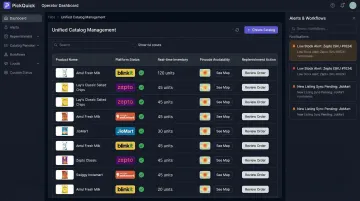
The result: zero stockouts, clean GRNs, and stable availability metrics that hold up across cities — without the brand team managing it day-to-day.
Frequently Asked Questions
How to increase store listing conversion rate?
Focus on five core levers: high-quality images with clean backgrounds, complete and keyword-optimized product information, competitive pricing benchmarked against category norms, strong customer reviews, and consistent stock availability. QC platforms rank and surface listings based on all five — neglecting any one of them caps your visibility.
Is a 2.5% conversion rate good?
2.5% is a commonly cited global e-commerce average, but Quick Commerce benchmarks vary by category and intent. Everyday FMCG items on QC platforms typically outperform that figure when listings are well-optimized and products stay in stock.
What is the biggest reason customers don't convert on Quick Commerce listings?
Out-of-stock status and poor-quality listing images are the two most common conversion killers. Both are operational problems requiring replenishment discipline and professional cataloging — not fixes a campaign can paper over.
How do I track my conversion rate on Blinkit or Zepto?
Use the Blinkit Brand Portal or Zepto Seller Dashboard to access impression-to-purchase data. Track over a minimum 30-day window — shorter windows produce noisy, unreliable trends.
Does pricing affect conversion rates on Quick Commerce platforms?
Yes. Price visibility is high on QC apps since multiple brands appear side by side, making competitive pricing important. However, price alone isn't the only driver—brand trust, availability, and delivery speed are equally critical factors.
How does being listed on multiple QC platforms affect overall conversion performance?
Multi-platform presence expands your conversion opportunities, but it multiplies operational complexity. Inventory and listing quality must be managed independently across Blinkit, Zepto, Swiggy Instamart, and JioMart — any gap on one platform drags overall performance.