Managing multi-brand Quick Commerce campaigns through partners requires more than just listing products. It demands synchronized inventory across thousands of dark stores, platform-specific ad execution on four different dashboards, and consolidated reporting that actually reveals what's working. Most brands are attempting this coordination without the infrastructure, platform relationships, or operational discipline to make it sustainable.
Key Takeaways
- Fragmented vendor setups cause stockouts mid-campaign, delayed go-lives, and performance data scattered across dozens of dashboards
- Multi-brand QC campaigns work when inventory, platform ads, and messaging move together—not in sequence
- One operator with platform rights handles activation, replenishment, and advertising as a single integrated operation
- Budgets pooled across brands unlock better placements, quarterly commitments, and more predictable campaign ROI
- Regional brands with ₹5-7 crore/month offline demand go live 3-5x faster through operator-level platform access
What Running a Multi-Brand Quick Commerce Campaign Actually Involves
A multi-brand Quick Commerce campaign in India means activating two or more brand SKUs simultaneously on platforms like Blinkit and Zepto, with aligned inventory, pricing, and in-app visibility. For example, a dairy brand and a masala brand launching coordinated promotional pushes in Mumbai and Bengaluru at the same time, each with dedicated ad spend but shared operational infrastructure.
The coordination layers required:
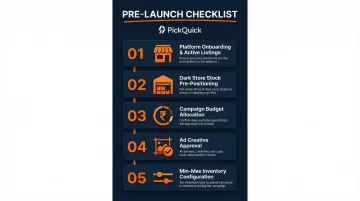
Before a single customer sees your promotion, several systems must align:
- Complete platform onboarding and active listings for each brand
- Dark store stock must be pre-positioned across target pincodes
- Campaign budgets allocated per platform and approved
- Ad creatives submitted and cleared through platform-specific approval workflows
- Min-Max inventory levels configured to prevent stockouts during high-velocity windows
India's QC market reached ₹6-7 billion GMV in 2024 and is growing at roughly 40% annually through 2030. For FMCG brands, Quick Commerce now accounts for 30-60% of online sales.
Single-brand vs. multi-brand execution:
Single-brand campaigns have one point of accountability: one inventory pool, one ad budget, one replenishment schedule. Multi-brand execution adds complexity:
- Shared budgets between brands competing for the same placement slots
- Conflicting SKU priorities when dark store space is limited
- Pincode-level assortment gaps where Brand A is live but Brand B isn't yet approved
- Platform rules that differ by category; dairy has different packaging compliance than masalas
What "through partners" means operationally:
A QC partner is not a logistics vendor. It's an operator with platform-level access, which means they can manage store-level replenishment, trigger campaigns, and update listings or pricing without waiting on brand-side approvals for each change.
This is where regional brands feel the gap most sharply. A brand doing ₹5-7 crore/month through traditional distribution has proven demand, but that demand doesn't automatically translate to QC velocity without the infrastructure to support it. A partner bridges that gap through:
- Pre-built platform relationships that skip months of onboarding friction
- Dark store coverage across 10,000+ pincodes, ready to activate
- Established compliance history across categories, reducing listing rejections
- Real-time replenishment visibility so stock gaps don't kill campaign momentum
Why Fragmented Campaign Management Fails Regional Brands
The fragmented vendor trap creates compounding operational failures. Brands working with separate vendors for onboarding, warehousing, last-mile, and advertising across each platform have no single owner of campaign performance. This structure leads to:
- Missed go-live windows when onboarding delays aren't communicated to the advertising team
- Uncoordinated promotions where ads run but inventory hasn't reached dark stores
- Stockouts during active ad pushes because supply chain and campaign teams operate independently
The Communication Overhead Problem
Research on vendor consolidation shows that managing multiple vendors can increase administrative overhead by up to 70% compared to consolidated models. In Quick Commerce, brand teams lose hours daily coordinating across agency touchpoints via WhatsApp groups. That doesn't scale when you're managing four platforms across ten cities.
Inventory-Campaign Misalignment Risk
When a campaign runs on Blinkit but dark store stock isn't replenished to match expected demand, you lose both the ad spend and customer trust. This disconnect happens most often when the campaign manager and supply chain manager are different vendors with different priorities.
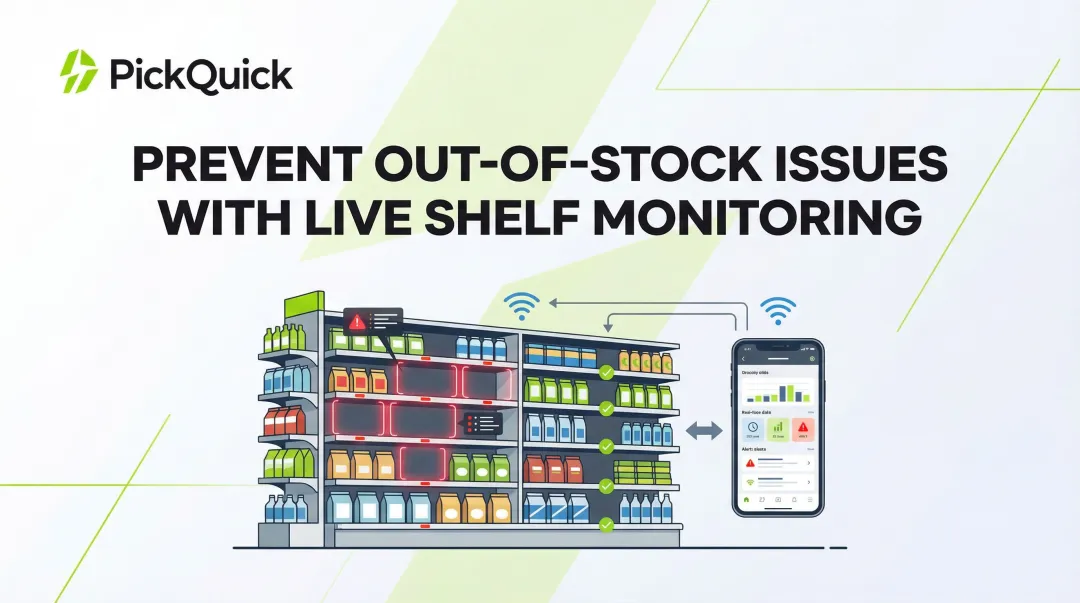
On Blinkit, ad delivery is strictly inventory-led. If your product is out of stock in a specific dark store, your ad won't surface in that pincode—regardless of budget or bid. Running campaigns before stock confirmation burns money on impressions that can't convert.
Budget Dilution Problem
That wasted ad spend compounds when budgets are fragmented across vendors. Smaller allocations per platform, split across individual vendors, consistently underperform against consolidated budgets managed by a single operator.
When one operator manages 25+ brands, they negotiate better placement rates and prioritize spend using real-time category data. Swiggy Instamart, for instance, offers ₹8-10 lakh Quarterly Brand Packs that bundle display ads, push notifications, and featured placement—pricing that works only at consolidated scale.
How a Single QC Partner Manages Campaigns Across Multiple Brands
The Operator Rights Model
A QC partner with operator rights has platform-level access to manage listings, pricing, promotions, and ads on your behalf. Campaign activation doesn't require back-and-forth approvals — it executes faster at city and pincode level because the operator controls the Seller Hub directly.
This means:
- Listing changes go live in hours, not days
- Pricing updates synchronized across platforms without waiting for brand approval cycles
- Ad campaigns triggered based on real-time stock availability
- Replenishment orders created daily without manual coordination
Shared Infrastructure Benefits
When one partner manages 25+ brands across 10,000+ pincodes, each brand benefits from:
- Pre-established dark store relationships that take new brands months to build independently
- Existing platform account health that accelerates approval cycles
- Campaign precedents — knowledge of what ad formats, budgets, and placements work for specific categories in specific cities
A new dairy brand joining this network can go live in weeks rather than months, inheriting the operator's existing motherhub allocations and dark store trust scores.
That shared infrastructure extends directly into how advertising budgets work — and this is where the financial case for a partner becomes hard to ignore.
Consolidated Budget Advantage
Instead of each brand managing a small, isolated ad budget, a partner pools advertising commitments across brands and platforms into quarterly campaign calendars. This creates:
- Better negotiating power with platforms — larger quarterly commitments unlock premium placements
- More consistent visibility — seasonal planning prevents budget exhaustion mid-campaign
- Fewer wasted ad cycles from brands running out of budget during peak demand windows
Large FMCG companies are now allocating 5-6% of their ad spends to Quick Commerce, and platforms reward consolidated spenders with preferential treatment.
Brand Identity Preservation
A QC partner managing multiple brands keeps each one operationally separate — competing brands in the same category are never cross-promoted. In practice, this means:
- Distinct campaign creatives and messaging built per brand, not recycled across the portfolio
- Category-specific ad placements so a masala brand and a dairy brand don't compete for the same shelf slot
- Separate replenishment schedules and SKU configurations, even when using shared dark store infrastructure
Speed to First Campaign
Brands working with a partner holding existing operator rights go live in weeks, not months. Blinkit onboarding alone takes 2-4 weeks for APOB GST approval — and that's only if packaging compliance, barcode readiness, and professional product imaging are already in place. A partner handles all this pre-work upfront, cutting the delay that pushes most brands' first campaign cycle back by a full quarter.
The Operational Backbone: Inventory, Replenishment, and Platform Coordination
The Operational Backbone: Inventory, Replenishment, and Platform Coordination
Inventory Readiness as a Campaign Prerequisite
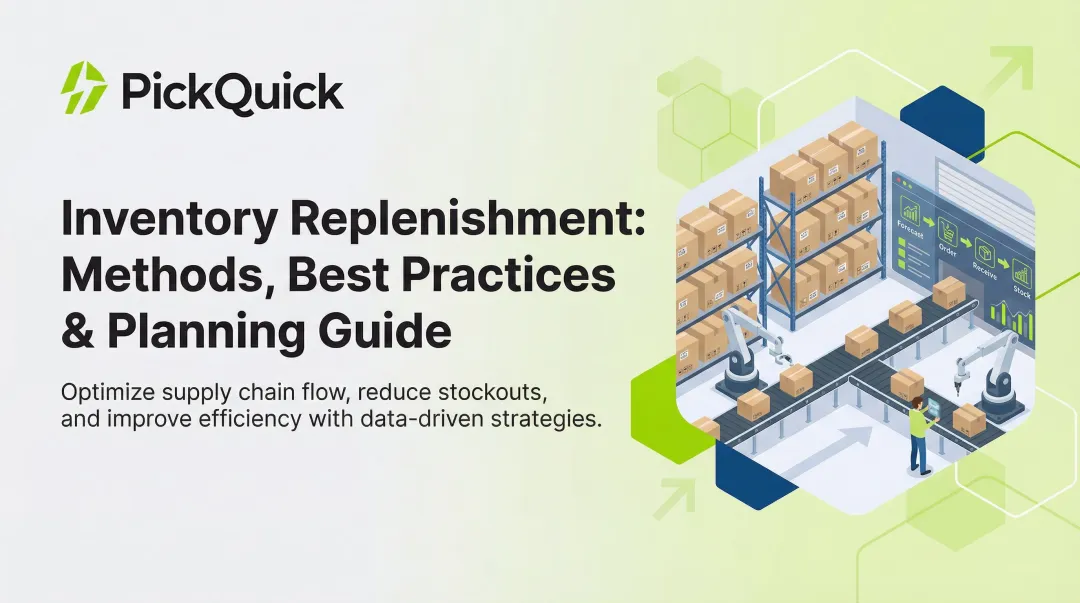
A QC campaign without min-max optimization at the dark store level will drain availability within hours of going live. Min-Max sets the reorder floor (when a dark store triggers replenishment) and the stock ceiling (maximum allowable holdings at that location).
The operator's ability to monitor and replenish across pincodes in real time is what separates a campaign that sustains momentum from one that burns budget against empty shelves.
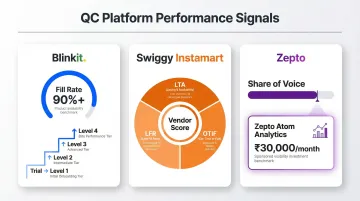
Blinkit requires a sustained 90%+ fill rate. Dropping below 80% triggers algorithmic demotion—reducing search ranking and ad visibility even if your budget is fully funded.
Platform-Specific Coordination
Each platform has different ad formats, campaign approval timelines, and visibility mechanics:
| Platform | Ad Format | Approval Timeline | Visibility Mechanic |
|---|---|---|---|
| Blinkit | Product Booster (Search), Brand Spotlight | 2-4 weeks onboarding | Auction-based CPC; inventory-led |
| Zepto | Swap and Save (Cart interception), Sponsored Products | 4-8 weeks category approval | Cart interception at checkout |
| Swiggy Instamart | Item Ads, Guaranteed Top Slot | 10-21 working days | Cross-platform discovery from food delivery |
| JioMart | Sponsored Products, Headline Search | A few working days | AI-powered automatic targeting |
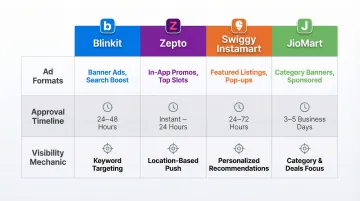
A partner managing all four simultaneously must maintain separate workflows while keeping your campaign calendar consistent across platforms.
Multi-City Activation
A three-city launch across Mumbai, Bengaluru, and Delhi on the same date demands:
- Pincode-level stock planning based on city-specific demand data
- Staggered replenishment schedules accounting for motherhub-to-dark-store transit times
- Demand signal calibration by city — Mumbai masala buyers and Bengaluru buyers have distinct volume patterns and SKU preferences
Getting this right across even two cities requires coordination that most brand teams aren't structured to run in-house — which is exactly where a single QC operator managing pincodes, platform accounts, and replenishment under one roof earns its place.
Tracking and Measuring Multi-Brand Campaign Performance on QC Platforms
Key performance signals that matter:
Quick Commerce campaigns require operationally specific KPIs, not just standard digital marketing metrics:
- Search-to-conversion rate — How many searches for your product result in purchases
- Platform share of shelf — Your visibility relative to competitors in the same category
- Availability metrics — Out-of-stock rate during campaign windows
- Incremental revenue lift per city or pincode — Geographic performance variations
Blinkit prioritizes Fill Rate and Level progression (Trial to Level 4). Swiggy Instamart uses a Vendor Score comprising Late Turnaround (LTA), On Time In Full (OTIF), and Line Fill Rate (LFR). Zepto tracks Share of Voice (SOV) and offers Zepto Atom, a ₹30,000/month analytics tool providing minute-by-minute sales and pincode-level market share.
Unified Reporting Across Brands and Platforms
Rather than pulling separate reports from Blinkit, Zepto, and Swiggy Instamart for each brand, a QC operator consolidates campaign performance into a single view. Brand teams can evaluate ROI and shift budgets without platform-by-platform analysis — one dashboard, all brands, all platforms.
From Performance Data to Smarter Campaign Planning
Real-time availability tracking and conversion data from one campaign cycle should directly shape the next — informing assortment choices, budget splits, and timing. A partner managing data across 25+ brands can benchmark what good looks like across categories, something an in-house team with limited cross-brand visibility simply can't replicate.
That cross-brand view is where geographic precision becomes actionable. If a masala brand's blended varieties outperform CTC masalas in Bengaluru but not in Delhi, the next campaign can allocate more budget to blended SKUs in South India while maintaining CTC focus in North India.
Frequently Asked Questions
What is a multi-brand Quick Commerce campaign?
A coordinated promotional push where multiple brand SKUs are activated simultaneously across QC platforms like Blinkit and Zepto, with aligned inventory and in-app advertising managed as a unified effort rather than separate brand-by-brand launches.
Why is it difficult to manage QC campaigns without a dedicated partner?
Platform-level complexity, inventory-campaign misalignment, and fragmented vendor coordination create operational bottlenecks. Brands without platform operator access cannot execute campaigns fast enough to capitalize on demand windows or prevent stockouts during live ad pushes.
How does a QC partner manage campaign budgets across multiple brands?
By pooling ad commitments across brands into quarterly campaign calendars, enabling better placement rates with platforms and reducing budget waste. Consolidated spending creates stronger negotiating power that individual brands can't achieve independently.
Which Quick Commerce platforms should regional brands prioritize for campaigns?
Blinkit, Zepto, Swiggy Instamart, and JioMart are the major platforms. Prioritization depends on category (Instamart performs well for masalas, while Blinkit dominates blended masala search), city-level platform penetration, and where you already have audience demand signals.
How long does it take to go live on Quick Commerce with a partner?
Brands working with a QC operator that holds platform operator rights typically go live in weeks rather than months. The partner handles packaging compliance, barcode registration, and platform documentation — so brands skip the queue.
How do brands track campaign performance across different QC platforms?
A QC partner consolidates performance data into a unified dashboard covering availability, search visibility, and conversion metrics — so brand teams can evaluate ROI and adjust spend without pulling data from each platform separately.