Introduction
India's quick commerce market has crossed ₹50,000 crore, with Blinkit, Zepto, and Swiggy Instamart each promising 10–30 minute delivery. The sector already accounts for two-thirds of all 2024 e-grocery orders in India, and the gap with traditional e-commerce keeps widening.
For FMCG brands with strong offline distribution, choosing where to list is a strategic decision with real revenue implications. Each platform carries different commission structures, category strengths, dark store footprints, and audience profiles. Without clarity on these differences, brands end up with fragmented inventory, inconsistent availability metrics, and platform-specific demands that stall growth instead of accelerating it.
This article provides a platform-by-platform breakdown of market share, seller economics, operational demands, and strategic recommendations to help brands prioritize the right quick commerce channels for sustainable growth.
TLDR:
- Blinkit leads with 50%+ market share and ₹709 AOV — strongest for FMCG and impulse buys
- Zepto targets Gen Z with fast onboarding and strong performance in snacks and beverages
- Instamart excels in essentials and staples with largest basket sizes (₹514 AOV)
- Multi-platform presence is essential—single-platform brands cede 50%+ of market opportunity
- Managing multiple platforms demands dedicated QC operations or an experienced operator partner
The Big Three: What Each Platform Is Known For
Each platform has a distinct identity — different dark store footprints, different customer bases, and different strengths for brand operators. Here's how they break down.
Blinkit (Backed by Zomato/Eternal)
Owned by Zomato (rebranded as Eternal Ltd), Blinkit positions itself as an "everything store" — 1,544 dark stores across 100+ cities, targeting high Average Order Value (₹709 projected for 2026) through a dense, quality-controlled network.
The platform excels in:
- High-frequency FMCG staples and impulse purchases
- Gifting and premium product categories
- Metro-first expansion with deep urban penetration
- Repeat purchase customers with established buying habits
- Blended masala categories with strong niche conversion rates
Blinkit contributed 26% of Eternal's sales in FY25 and is projected to reach 60% by 2026, reflecting its growth momentum and platform maturity.
Zepto: The Algorithm-Driven Challenger
Zepto is an independent, venture-backed startup that raised $450M at a $7B valuation in October 2025 and filed for a ₹10,200 crore IPO in December 2025. Operating 1,000+ dark stores across 80+ cities, Zepto strictly focuses on 10-minute impulse buys and high-frequency essentials. Platform strengths include:
- Algorithm-driven inventory planning and demand forecasting
- Strong appeal to Gen Z (18-24) and millennials (25-34)
- Fast onboarding cycles (3-7 days for qualified brands)
- Category leadership in snacks, beverages, and trend-driven D2C products
- Price-led promotional engine for rapid trial generation
For brands targeting younger urban buyers, Zepto's demand forecasting and fast onboarding cycles offer a meaningful edge in trial generation and repeat velocity.
Swiggy Instamart: The Essentials Powerhouse
Instamart runs on Swiggy's existing logistics infrastructure, and 29% of new Instamart users come directly from food delivery. With 1,021 dark stores across 124 cities and a 4.0 million sq. ft. footprint, the platform focuses on:
- Essentials-heavy categories: groceries, staples, personal care, household
- Larger basket sizes through "Megapods" (10,000+ sq. ft. stores with 50,000 SKUs)
- Cross-platform discovery advantage from Swiggy's food delivery funnel
- Strongest masala platform in India with highest variety acceptance
- Cooking accompaniments with excellent repeat purchase behavior
The cross-platform funnel is Instamart's clearest structural advantage — food delivery users converting to grocery buyers means built-in trial for daily-use brands without paid acquisition costs.
Market Share, Coverage & Who's Growing Fastest
Market Share Breakdown (2025)
India's quick commerce market reached ₹50,000-58,000 crore in 2024 and is projected to grow at 40-53% CAGR, reaching ₹2.25-4.2 lakh crore by 2028-2030. Current market share estimates:
- Blinkit: 50%+ market share (BofA Securities, September 2025)
- Zepto: 28-29% market share (Motilal Oswal/CLSA estimates)
- Swiggy Instamart: 24-25% market share (Motilal Oswal estimates)
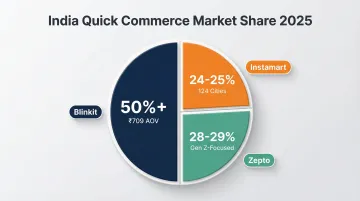
These figures shift rapidly— and understanding what drives each platform's trajectory helps explain why the rankings aren't locked in.
What's Driving Growth for Each Player
Blinkit: Monetization at Scale
- Early mover advantage with established dark store density in metros
- Integration with Zomato's advertising infrastructure and user base
- Mature retail media network—ad revenue grew 220% YoY, crossing ₹1,000 crore in FY25
- Highest AOV (₹709) driving superior unit economics
Zepto: Speed and Tech-First Growth
- Large funding rounds ($1.8B+ raised since 2024) fueling aggressive expansion
- Fastest dark store rollout — targeting 1,000+ stores by mid-2025
- Technology-first approach with proprietary inventory algorithms
- Strong Gen Z brand positioning and social media visibility
Instamart: Platform Synergies and Geographic Reach
- Swiggy's existing 29% user crossover from food delivery
- Megapod infrastructure enabling 50,000 SKU assortments
- 1 in 4 new users came from non-metro cities in FY25, indicating geographic expansion
- Lower customer acquisition costs through platform synergies
Coverage Comparison by Geography
| Platform | Stores | Cities | Key Strengths |
|---|---|---|---|
| Blinkit | 1,544 (targeting 2,000 by Dec 2025) | 100+ | Delhi NCR, Mumbai, Bangalore, Hyderabad, Pune, Chennai |
| Zepto | 1,000+ | 80+ | Metro depth + aggressive Tier-2 rollout |
| Instamart | 1,021 | 124 | Widest footprint, 4.0M sq. ft. warehouse capacity |
Coverage gaps matter for brands with regional strongholds. A masala brand dominant in Tamil Nadu needs Instamart's Chennai depth, while a premium snack brand targeting Mumbai relies on Blinkit's metro density.
Commissions, Fees & Category Performance Compared
Blinkit: What Sellers Pay and Where They Win
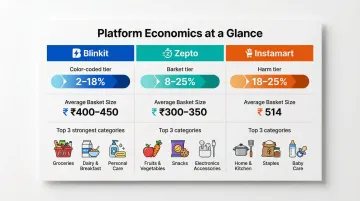
Blinkit operates a variable commission model ranging from 2% to 18% based on selling price and category:
- Groceries: 5-10%
- Personal Care: 10-15%
- Home & Kitchen: 8-12%
- Electronics: 2-5%
The platform requires a ₹25,000 per SKU/state listing fee, returned as ad credits through Brand Central. Operational hygiene (consistent stock availability, accurate catalog data, and clean GRN records) is non-negotiable for maintaining listing quality.
High-velocity, impulse-driven SKUs perform best on Blinkit:
- FMCG staples and instant snacks
- Beverages (soft drinks, juices, energy drinks)
- Gifting and premium products
- Home cleaning and personal hygiene
- Blended masalas with strong niche appeal
Blinkit's customer base skews toward premium urban buyers with high repeat frequency. Brands that drop below 95% availability lose search rank fast — sponsored listings only amplify visibility if stock is already stable.
Zepto's commission ceiling runs higher than Blinkit's, but it comes with faster onboarding and a distinctly younger buyer profile.
Zepto: What Sellers Pay and Where They Win
Zepto's commission ranges from 8% to 25% depending on category and fulfillment model:
- Fast-moving groceries: 8-12%
- Personal care: 12-18%
- Premium categories: 18-25%
Competitive pricing is critical on Zepto given price-sensitive category competition. The platform offers the fastest onboarding: most sellers go live within 3-7 working days with proper documentation.
Zepto's younger demographic drives specific category strengths:
- Gen Z snacks (chips, namkeens, cookies)
- Trendy beverages (kombucha, cold brew, flavored waters)
- Fast-moving personal care (face masks, hair care, grooming)
- D2C products with social media visibility
- Mid-premium brands with aspirational positioning
Zepto's algorithm de-ranks out-of-stock SKUs aggressively — a two-day stockout can set back search placement by weeks.
Instamart operates at a higher take-rate than either platform, but its basket sizes and essentials-led repeat behavior change the margin math.
Instamart: What Sellers Pay and Where They Win
Instamart targets a steady-state take-rate of 20-22% (up from 15.2% in Q2FY25), with category-specific variations:
- Groceries and staples: 18-20%
- Personal care: 20-22%
- Premium categories: 22-25%
Discount participation is often expected, which can compress margins. However, large basket sizes from essentials categories (₹514 AOV) offset this through higher absolute order values.
Instamart dominates in daily essentials with high repeat behavior:
- Groceries and staples (rice, atta, pulses)
- Dairy and fresh produce
- Home care and cleaning products
- Personal hygiene and baby care
- CTC and blended masalas (best masala platform in India)
Brands with strong offline recall in staples and cooking categories tend to transfer that trust directly — Instamart buyers shop with meal planning in mind, not impulse.
Quick Comparison: Commission Ranges & Category Fit
| Platform | Commission Range | Avg. Basket Size | Strongest Categories |
|---|---|---|---|
| Blinkit | 2–18% | ₹400–450 | FMCG, snacks, premium impulse |
| Zepto | 8–25% | ₹300–350 | Gen Z snacks, D2C, personal care |
| Instamart | 18–25% | ₹514 | Groceries, dairy, masalas, staples |
Dark Stores, Onboarding & Operational Demands for Brands
How Dark Store Replenishment Works
Each platform operates a network of micro-warehouses (dark stores) holding brand inventory closest to consumers. Brands must supply stock continuously — any stockout directly causes lost orders and algorithm de-ranking. Blinkit requires a sustained 90%+ fill rate; dropping below 80% triggers algorithmic demotion, reducing search ranking and ad visibility.
Min-Max Inventory Management:
Every dark store has minimum and maximum holding quantities for each SKU:
- Min: The threshold at which the store demands more stock
- Max: The ceiling on how much stock the store can hold
Brands must maintain stock levels between these limits. Failing to do so causes either stockouts (triggering availability penalties) or dead stock (write-offs and ageing fees).
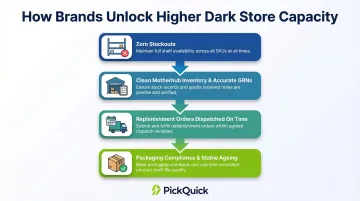
Max levels expand only once a brand consistently demonstrates:
- Zero stockouts across the dark store network
- Clean Motherhub inventory and accurate GRNs
- Confirmed Replenishment Orders (ROs) dispatched on time
- Full packaging compliance and stable dark store ageing
Onboarding Difficulty by Platform
Each platform has a distinct entry bar. Here's how they compare:
Zepto: The fastest digital onboarding of the three, with Category Manager-led processes. Qualified brands with proper documentation (FSSAI, GST, catalog readiness) can go live in 3–7 days — the simplest entry point for brands new to quick commerce.
Blinkit: Stricter requirements around quality checks and stock readiness before dark store acceptance. The self-serve Seller Hub speeds up registration, but APOB (Additional Place of Business) GST approval takes 2–4 weeks per state. Expect stronger operational discipline from day one.
Instamart: Falls in the middle — flexible on SKU acceptance, but brands need to be prepared for deep discount participation. Timelines typically run 2–3 weeks for established brands, depending on category and compliance verification.
What Brands Often Underestimate
Catalog Readiness:
- Correct images (Front of Pack, Back of Pack, Picker Image, Barcode Image)
- Accurate weights, dimensions, and descriptions
- FSSAI and packaging compliance verification
- GS1 barcode readiness and scanability
Getting catalog right is the prerequisite — but the ongoing operational load is what catches most brands off guard.
Ongoing Operational Demands:
- Managing separate dashboards, ad budgets, pricing, and inventory signals across platforms
- Daily RO confirmation cycles and dispatch coordination
- Motherhub inwarding (stock intake) quality checks and GRN/DN management
- Real-time availability tracking and stockout prevention
Brands handling this independently typically take 3–6 months to go live across all three platforms. Operators like PickQuick compress that timeline significantly — managing catalog readiness, dark store replenishment, and Min-Max optimization across 10,000+ pincodes so brands skip the trial-and-error phase entirely.
Advertising & Visibility Tools on Each Platform
Blinkit's Ad Ecosystem (Brand Central)
Blinkit offers the most mature retail media network with self-serve advertising tools:
- Product Booster: Keyword search placement with wallet-based bidding
- Sponsored Brand Banners: High-impact homepage and category page visibility
- Brand Stores: Dedicated brand pages with curated product assortments
Blinkit's ad revenue grew 220% YoY, crossing ₹1,000 crore in FY25, reflecting platform maturity and strong advertiser adoption. The ₹25,000 per SKU/state listing fee is returned as ad credits, which offsets initial campaign costs. That said, ongoing ad spend must still be factored into margin calculations — search-to-conversion gains don't always cover rising CPCs at scale.
Zepto's Promotions Model
Zepto offers simpler but effective visibility tools:
- Swap and Save: Cart interception that suggests alternatives for slow-moving inventory
- Homepage Banners: Premium placement for category takeovers
- Brand Day Promotions: Time-limited promotional events
- Zepto Atom: ₹30,000/month AI-powered analytics tool providing Share of Voice tracking and competitive insights
Zepto moves fast — it's best suited for brands targeting younger urban buyers through trial-driven launches. Promotions here are weighted heavily by recency and engagement signals, meaning a Brand Day that launches on the wrong week can underperform significantly compared to one timed around platform traffic peaks.
Instamart's Cross-Platform Advantage
Swiggy Ads integration enables unified campaigns across food delivery and grocery:
- Item Ads: Keyword search and Browse Boost placements
- Banner Ads: Category page and homepage visibility
- Brand Packs: ₹8–10 lakh quarterly commitments for sustained visibility
- Cross-Platform Funnel: Discovery through Swiggy food orders driving Instamart conversions
A March 2026 case study reported blended ROAS of 6.9X for an FMCG brand (Blinkit: 8.7X, Zepto: 7.9X, Instamart: 4.1X). Instamart's lower standalone ROAS reflects its role as a discovery surface rather than a high-intent purchase channel — cross-platform lift from Swiggy food orders is where it earns its spend.
Which Platform(s) Should Your Brand Be On?
Category-Based Recommendations
Blinkit Priority Categories:
- FMCG staples and instant snacks
- Beverages and energy drinks
- Gifting and premium products
- Blended masalas and specialty foods
- Home cleaning and personal care
Zepto Priority Categories:
- Gen Z snacks and trendy beverages
- Fast-moving personal care
- D2C products with social media presence
- Mid-premium brands targeting urban youth
- Impulse-buy categories with strong packaging
Instamart Priority Categories:
- Groceries, staples, and daily essentials
- Dairy and fresh produce
- Masalas (both CTC and blended—best masala platform)
- Home care and cleaning products
- Baby care and personal hygiene
The Case for Multi-Platform Strategy
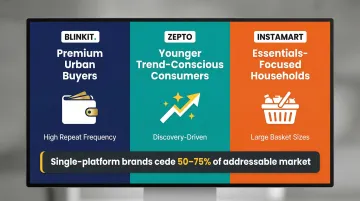
The strongest brands in quick commerce operate across all three platforms simultaneously. Each platform reaches different micro-segments:
- Blinkit: Premium urban buyers with high repeat frequency
- Zepto: Younger, trend-conscious consumers seeking discovery
- Instamart: Essentials-focused households with large basket sizes
Limiting to one platform means ceding 50-75% of addressable market share. A snack brand on Blinkit alone misses Zepto's Gen Z audience and Instamart's cooking-accompaniment buyers. A masala brand on Instamart alone loses Blinkit's niche conversion strength and Zepto's trial generation.
That strategic case is straightforward. The execution is where most brands hit a wall.
The Operational Challenge of Multi-Platform Presence
Managing simultaneous presence across Blinkit, Zepto, and Instamart requires:
- Maintaining separate replenishment cycles for each platform's dark store network
- Platform-specific pricing strategies and promotional calendars
- Running and optimizing campaigns across multiple separate ad dashboards
- Unified catalog management with platform-specific requirements
- Real-time availability tracking across 3,500+ dark stores nationwide
Operational fragmentation consistently prevents brands from scaling despite strong offline demand. Stock sitting in a central warehouse is invisible to consumers on the app—brands must maintain pincode-level availability across distributed dark store networks.
PickQuick manages this end-to-end across Blinkit, Zepto, Instamart, and JioMart: onboarding, dark store replenishment, advertising, and real-time availability tracking under one operator. Brands across 10,000+ pincodes go live 3-5x faster than self-managed onboarding and maintain 98%+ availability metrics that sustain algorithmic ranking.
Frequently Asked Questions
Are Zepto and Instamart the same?
No, Zepto and Instamart are distinct, independent companies. Zepto is an independent startup (Kiranakart Technologies Private Limited), while Instamart is Swiggy's quick commerce vertical. Both compete directly with different dark store networks, category strengths, and target audiences.
Are Blinkit and Instamart the same?
Not at all. Blinkit is owned by Zomato (Eternal Ltd), while Instamart is Swiggy's grocery delivery service. They compete directly but operate independent dark store networks with different seller onboarding processes and commission structures.
What is Instamart and how does it work?
Instamart is Swiggy's quick commerce service that delivers groceries, staples, and daily essentials in 15-30 minutes. It operates through a network of dark stores positioned near residential areas, powered by Swiggy's existing logistics infrastructure and cross-platform user base from food delivery.
Is Blinkit available in the USA?
No, Blinkit currently operates only in India with 1,544 stores across 100+ cities, focusing on major metros and rapidly expanding to Tier-2 cities. It is not available in the USA or other international markets.
Which platform is best for a new brand entering quick commerce?
New brands with FMCG or snack products typically find Zepto the easiest entry point due to faster onboarding (3-7 days). Brands in essentials or staples may find Instamart more accommodating with flexible SKU acceptance. Blinkit offers the highest visibility but requires stronger operational readiness .
Can a brand sell on Blinkit, Zepto, and Instamart at the same time?
Yes, selling across all three platforms simultaneously gives brands the widest reach in quick commerce. That said, managing separate inventory, pricing, and advertising across platforms demands significant coordination — either through a dedicated in-house team or a QC operator like PickQuick that handles multi-platform operations end-to-end.