Introduction
India's Quick Commerce revolution has redefined consumer expectations—10 to 30-minute delivery is no longer a premium luxury but the baseline standard, especially in dense urban markets. For regional FMCG brands, this shift creates immense pressure: meet these delivery windows or lose market share to competitors who can. The challenge isn't just speed—it's building the operational infrastructure to fulfill thousands of orders daily across hundreds of pincodes while maintaining availability, controlling costs, and preventing stockouts.
This article covers micro-fulfillment as the structural backbone of Quick Commerce in India—what these centers are, how they work, the measurable benefits they deliver, and proven strategies regional brands can use to compete on Blinkit, Zepto, Swiggy Instamart, and JioMart.
TLDR:
- Micro-fulfillment centers are small urban warehouses (2,000–6,000 sq ft) built for 10–30 minute delivery
- Localized inventory cuts last-mile costs by up to 53% and reduces spoilage by 30%
- Node placement, Min-Max discipline, and real-time availability tracking determine profitability
- Every major QC platform in India runs on dark store micro-fulfillment infrastructure
- Partnering with specialist operators gets regional brands live 3–5x faster than building in-house
What Is Micro-Fulfillment?
Micro-fulfillment is a logistics model where small-scale fulfillment nodes are positioned close to dense urban populations to enable faster, cheaper last-mile delivery. Unlike traditional regional distribution centers that serve broad geographies and ship in bulk, micro-fulfillment centers (MFCs) are compact facilities—typically 2,000 to 6,000 square feet—located within 2-4 km of customer demand clusters.
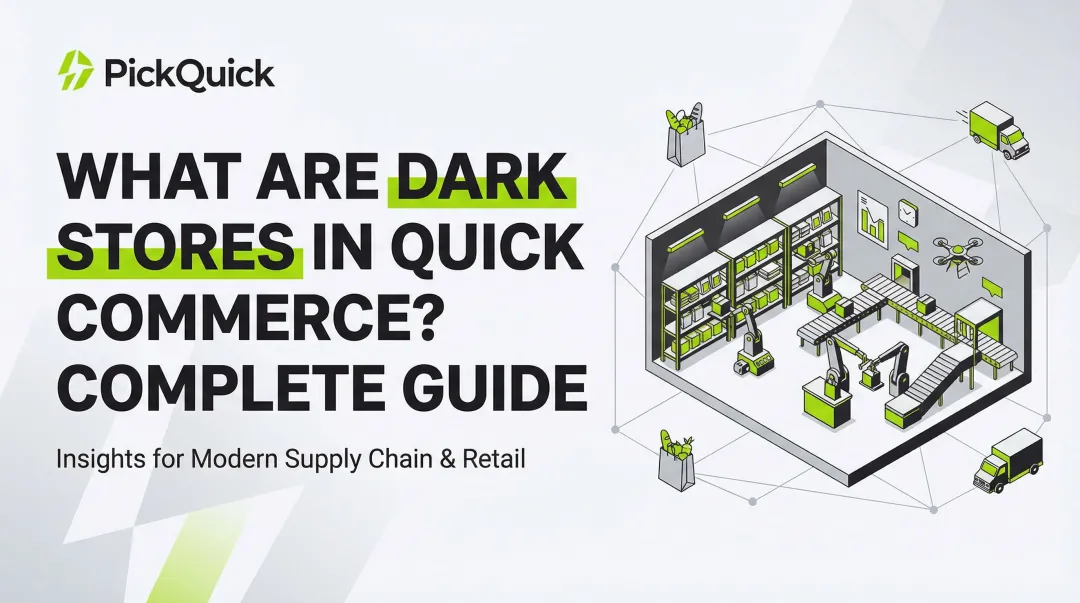
These facilities are purpose-built for speed. An MFC can hold 2,000 to 5,000 high-demand SKUs in a footprint smaller than a typical retail store. They operate in repurposed retail spaces, basements, former bank branches, or purpose-built dark stores. In Delhi's Sant Nagar, spaces that once housed clinics and tuition centers now function as makeshift warehouses, with a Blinkit dark store even displacing an ICICI Bank branch due to the constant flow of delivery riders.
How Micro-Fulfillment Centers Work
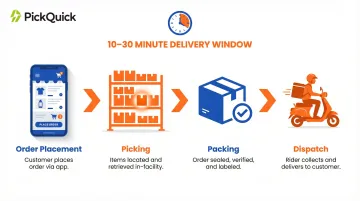
Each order moves through four steps:
- Order placement: A customer places an order via a Quick Commerce app
- Picking: A picker (human or robotic) retrieves items from local inventory within the MFC
- Packing: The order is packed and quality-checked
- Dispatch: A rider collects the order for last-mile delivery, often within minutes
MFCs don't stock an entire catalog. They carry only top-velocity SKUs based on local demand patterns, which drives far higher inventory turn rates. A regional warehouse might rotate stock monthly; high-density MFCs rotate weekly or even daily, keeping capital out of slow-moving inventory.
Key Benefits of Micro-Fulfillment Operations
Faster Delivery and Same-Day Fulfillment
Shortening the distance between inventory and customer directly compresses delivery windows. Blinkit and Zepto average ~10 minutes, while Swiggy Instamart cut its average delivery time to 13 minutes during fiscal 2025. This speed is only possible because inventory sits within a 2-3 km radius of demand clusters.
Consumer expectations have shifted accordingly. Delivery time segmentation in 2025 shows 62.24% of orders are for sub-ten-minute fulfillment. Regional brands that cannot match these windows lose visibility on platform search results and customer preference.
Reduced Last-Mile Delivery Costs
Last-mile logistics account for up to 53% of total shipping costs globally. In India, the economics are more favorable still: picking, packing, and delivery costs account for less than 12% of order value, compared to over 30% in Europe. Locating inventory near demand zones is what drives that gap.
The per-order cost reduction comes from four compounding factors:
- Shorter delivery routes with less fuel per trip
- Lower driver time per order at higher route density
- Fewer failed delivery attempts in familiar local zones
- Reduced return logistics on perishable and time-sensitive categories
For regional brands, these efficiencies add up to better unit economics — and room to compete on price without squeezing margins.
Smarter Inventory Management and Fewer Stockouts
Localizing inventory using pincode-level demand data reduces both overstock and stockouts. AI-driven Warehouse Management Systems in micro-fulfillment centers reduce stockout risks by up to 35%, while global benchmarks show spoilage reduction of 30% in ultra-fresh categories like dairy, meat, and produce.
For high-frequency FMCG categories — dairy, masalas, staples, bakery — this matters more than in most verticals. A stockout on a staple item doesn't just lose one sale; it erodes customer trust and reduces future platform visibility. Keeping high-velocity SKUs available at the right dark stores, not just in aggregate, is what separates brands with consistent platform presence from those that fall off the shelf algorithmically.
Competitive Parity for Regional and Mid-Sized Brands
Micro-fulfillment lowers the infrastructure barrier for brands that cannot compete with e-commerce giants on warehouse scale. Regional brands with ₹5-7 crore/month offline demand can now match delivery speeds and customer experience without building massive logistics networks.
Instead of building national distribution centers, they can access dark store networks through Quick Commerce platforms or specialist operators — and go live city by city at a fraction of the traditional capex. A masala brand in Maharashtra or a dairy cooperative in Karnataka can hold shelf space in Mumbai or Bengaluru dark stores without opening a single warehouse of their own.
Sustainability and Operational Efficiency
Shorter delivery routes directly reduce carbon emissions per order. Localized micro-fulfillment can reduce last-mile emissions by 17-26% compared to regional distribution centers. Additionally, leaner inventory cycles mean less capital tied up in slow-moving stock, reducing waste and improving working capital efficiency.
Micro-Fulfillment Strategies That Drive Results
Strategic Node Placement Using Demand Data
Location selection should not be based on real estate availability alone but on granular demand signals. To achieve operational profitability, a ~2,000 sq ft dark store requires around 700 daily orders. This threshold can only be reached by placing nodes where order frequency, delivery radius, and population density align.
Brands and operators should use platform-level data—order patterns by pincode, delivery heatmaps, and customer concentration—to identify where MFCs will generate the highest throughput. Blinkit's expansion strategy demonstrates this principle: 80% of new dark stores opened in Q4FY24 were concentrated in their top eight cities, not spread across new geographies. This density-first approach increased Gross Order Value per store from ₹6 lakh to ₹10 lakh per day.
SKU Rationalization—Stock Only What Sells Locally
Curate a lean, high-velocity assortment for each MFC based on local preferences rather than pushing an entire catalog. Over-assortment in a constrained space degrades picking speed and availability metrics. A dark store stocking 5,000 SKUs with 50% velocity is operationally inferior to one stocking 2,500 SKUs with 95% velocity.
For regional brands, this means understanding hyper-local consumption patterns. A masala brand might stock thecha blends in Maharashtra dark stores but idli podi in Tamil Nadu. This localization improves conversion rates and inventory turn while reducing waste.
Min-Max Inventory Thresholds for Replenishment
The Min-Max model defines a minimum stock level (triggering replenishment) and a maximum (preventing overstock) for each SKU. Setting the right thresholds based on demand velocity prevents both stockouts and dead inventory.
For example:
- High-velocity SKU (dairy, staples): Min = 50 units, Max = 200 units, replenishment every 24 hours
- Medium-velocity SKU (snacks, beverages): Min = 20 units, Max = 80 units, replenishment every 48 hours
- Low-velocity SKU (specialty items): Min = 5 units, Max = 20 units, replenishment weekly
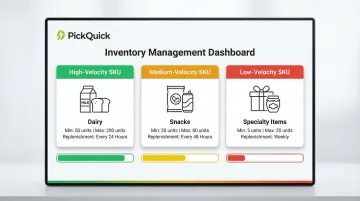
Platforms like Blinkit use Min-Max compliance as a ranking signal. Brands that maintain availability above 95% earn Max expansion, while those with frequent stockouts see Max shrinkage—directly limiting growth.
Technology and Automation Integration
WMS platforms, demand forecasting algorithms, and robotic picking systems each target a different operational bottleneck—accuracy, prediction, and speed. Global robotic systems can achieve 800 order lines per hour, but India's dark stores rely primarily on WMS-guided manual picking. Even at that level, barcode scanning reduces picking errors by 40-60% compared to paper-based processes, enabling Indian dark stores to pack orders in just 2.5 minutes.
Multi-Platform and Omnichannel Fulfillment
Running a single MFC node across multiple sales channels maximizes utilization and spreads fixed operational costs over higher order volumes. A dark store serving Blinkit, Zepto, and Swiggy Instamart simultaneously achieves better unit economics than one serving a single platform. To execute this well, operators need:
- Unified inventory management across all active platforms
- Real-time availability sync to prevent overselling
- Platform-specific compliance rules mapped to a single SKU catalog
The brands that crack multi-platform fulfillment early build a cost structure that single-channel operators can't match at scale.
Best Practices for Running Micro-Fulfillment Operations
Real-Time Availability Tracking and Proactive Replenishment
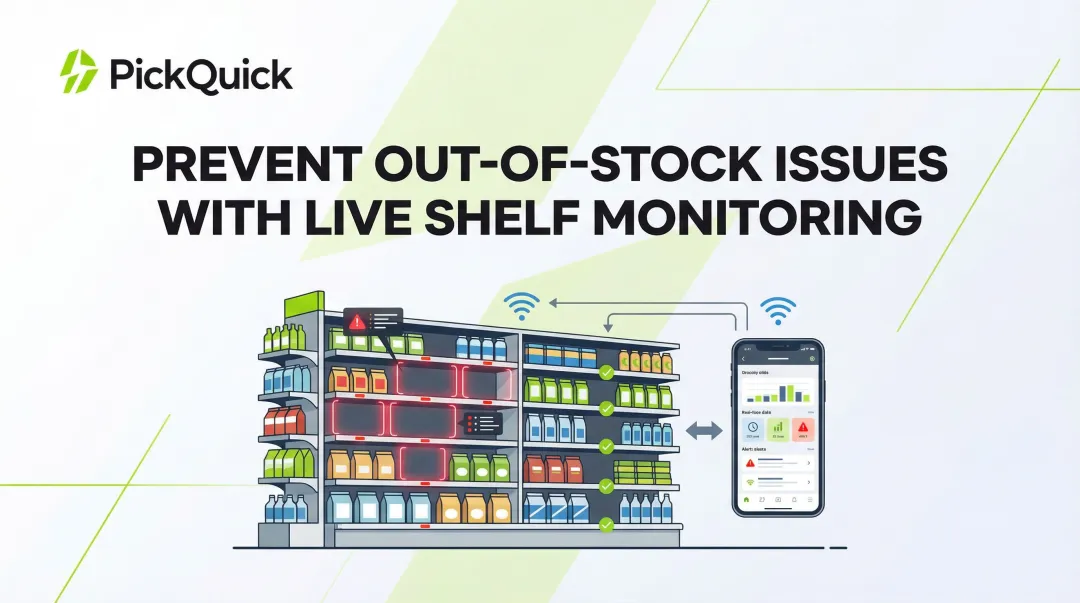
Maintaining high in-stock rates is the single most important operational metric in micro-fulfillment. Brands should monitor availability in real time across all nodes and trigger replenishment before stockouts occur. On platforms like Blinkit and Zepto, availability gaps trigger automatic reductions in Max levels and search visibility — and recovering that lost ranking takes weeks.
Proactive replenishment means:
- Monitoring stock levels continuously, not daily
- Triggering replenishment at 70-80% depletion, not 0%
- Maintaining buffer stock for high-velocity SKUs
- Adjusting Min-Max thresholds based on velocity trends
Efficient Pick-and-Pack Workflows
MFC layout design directly determines order cycle time. A dark store processing 2,000 orders daily loses hours of throughput if pickers are walking inefficient routes. Structure the layout to reduce travel time from the start:
- Place high-velocity SKUs closest to packing stations
- Group SKUs by category to reduce picker confusion
- Optimize picking routes for order batching, not single-order fulfillment
- Review layout quarterly as your SKU velocity mix shifts
The gap between a 2.5-minute and 5-minute pack time is small per order — but across 2,000 daily orders, it's the difference between hitting your SLA and missing it consistently.
Monitoring Key Operational KPIs
Track metrics that directly impact customer experience and platform rankings:
- Order processing time — Time from order placement to dispatch
- Fill rate — Percentage of orders fulfilled completely without substitutions
- On-time dispatch rate — Percentage of orders dispatched within platform SLA
- Inventory turn rate — How quickly inventory rotates through the MFC
- Availability percentage — In-stock rate for committed SKUs
- GRN/DN accuracy — Goods receipt accuracy and discrepancy rates
These metrics surface operational bottlenecks before they impact customer experience. A declining fill rate signals inventory issues; increasing order processing time indicates workflow inefficiencies.
Scaling Incrementally Across Cities
The best practice for expansion is phased city-by-city rollout using performance data from existing nodes, not simultaneous multi-city launches. Blinkit's density-first strategy validates this approach: concentrating 80% of new stores in existing top cities improved per-store economics before geographic expansion.
Regional brands should follow this sequencing:
- Dominate your home city first — own the pincodes where demand already exists
- Hit 95%+ availability and strong velocity in core pincodes before adding nodes
- Expand to neighboring cities only after stabilizing the home base
- Use performance data from initial nodes to refine your operational playbook before replicating it
Micro-Fulfillment in India's Quick Commerce Ecosystem
India's leading QC platforms—Blinkit, Zepto, Swiggy Instamart, and JioMart—are built entirely on a dark store micro-fulfillment model. Each dark store is a small, consumer-facing MFC that holds fast-moving SKUs and enables 10-30 minute delivery within a defined radius. This makes micro-fulfillment not just a strategy but the structural backbone of Quick Commerce in India.
Platform Infrastructure & Scale:
| Platform | Dark Store Count | Delivery Time |
|---|---|---|
| Blinkit | 1,816 (targeting 3,000) | ~10 minutes |
| Zepto | 1,000+ | ~10 minutes |
| Swiggy Instamart | 1,102 | ~13 minutes |
| JioMart | 600+ | Under 30 minutes |
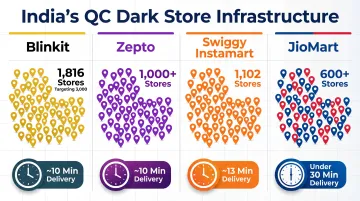
This infrastructure represents a massive shift in retail logistics. India's quick commerce sector accounted for over two-thirds of all e-grocery orders in 2024, with the market projected to grow at over 40% annually through 2030.
Challenges Regional Brands Face
Regional brands trying to leverage this infrastructure face specific operational challenges:
- Multi-platform onboarding complexity — Navigating different listing requirements, compliance standards, and approval cycles across Blinkit, Zepto, Instamart, and JioMart
- Dark store replenishment at scale — Managing daily replenishment cycles across hundreds of pincodes without dedicated QC operations teams
- Min-Max compliance — Maintaining optimal inventory levels across multiple dark stores simultaneously while preventing both stockouts and overstocking
- City-level assortment readiness — Preparing SKU assortments tailored to local demand patterns before platform approval
- Operational discipline — Ensuring packaging compliance, barcode accuracy, GRN quality, and availability metrics meet platform standards
These challenges explain why many regional brands struggle to scale beyond initial trial clusters despite strong offline demand.
Overcoming Challenges Through Specialist Operators
Regional brands can overcome these challenges by partnering with specialist Quick Commerce operators rather than building in-house capabilities from scratch. Operators like PickQuick handle the complete micro-fulfillment stack across all four major platforms, covering:
- Dark store replenishment and Min-Max optimization
- Multi-platform onboarding and compliance management
- Pincode-level availability tracking and demand visibility
For brands with ₹5-7 crore/month offline demand, this model delivers QC go-live in weeks rather than months—without the capital investment or operational overhead of building it internally.
Frequently Asked Questions
What is micro fulfillment?
Micro-fulfillment is a logistics strategy involving small fulfillment nodes (typically 2,000–6,000 sq ft) located near urban consumers to enable faster, lower-cost last-mile delivery compared to traditional large distribution centers.
What is the difference between a DC and an FC?
A Distribution Center (DC) primarily receives, stores, and ships large volumes of goods to retail locations or other facilities. A Fulfillment Center (FC) is designed to pick, pack, and ship individual customer orders directly—making FCs more consumer-facing and order-volume driven.
What are the 7 steps of the order fulfillment process?
The seven stages are: receiving inventory, storage, order processing, picking, packing, shipping, and returns management. Micro-fulfillment centers accelerate the middle steps—picking, packing, and dispatch—by positioning inventory close to the customer.
What is the difference between a micro-fulfillment center and a dark store?
A dark store is a specific type of micro-fulfillment center that is closed to the public and operates purely as a fulfillment node. The term is common in the Quick Commerce context in India (such as Blinkit and Zepto dark stores), while MFC is the broader logistics industry term.
How does micro-fulfillment reduce delivery costs?
By placing inventory within a short radius of customers, micro-fulfillment cuts transportation distance per order, reducing fuel costs, driver time, and the likelihood of failed delivery attempts—all of which compound into significant per-order savings at scale.
Is micro-fulfillment a viable model for regional or smaller brands?
Yes. Micro-fulfillment is particularly well-suited for regional brands because it allows them to serve local demand with precision without investing in large-scale national warehouse infrastructure, especially when they tap into existing QC platform dark store networks or partner with a specialist operator.
Ready to scale your regional brand on Quick Commerce? PickQuick manages end-to-end micro-fulfillment operations across Blinkit, Zepto, Swiggy Instamart, and JioMart—from dark store replenishment to pincode-level availability tracking. Contact us at swapnil@letspickquick.com or +91 94276 41749 to explore how we can accelerate your Quick Commerce growth.