Introduction
For FMCG and regional brands selling on quick commerce platforms, a stockout doesn't just mean a missed sale—it tanks your availability rate, hurts your platform ranking, and sends customers to a competitor's listing within seconds. Overstock compounds the damage: dark stores have limited shelf space, capital gets tied up, and perishable categories can expire before they sell.
The global cost of inventory distortion reached $1.77 trillion in 2023, comprising $1.2 trillion in out-of-stocks and $562 billion in overstocks. In India's ₹10,000+ crore quick commerce market, these stakes are even higher. With 10-minute delivery windows and hyperlocal demand patterns, the margin for error shrinks dramatically.
What follows breaks down how AI inventory management works in practice — and what brands on Blinkit, Zepto, Swiggy Instamart, and JioMart need to get right to stay in stock, stay ranked, and stay profitable.
Key Takeaways
- AI demand forecasting improves accuracy by 20-50% over traditional methods
- Pincode-level visibility prevents localized stockouts without creating overstock elsewhere
- Automated replenishment triggers maintain 95%+ availability rates, protecting platform ranking
- Real-time cross-platform tracking eliminates fragmented stock views
- Dynamic Min-Max optimization cuts inventory costs by 15-30% across multi-location networks
Why Inventory Management Is Uniquely Challenging in Quick Commerce
Quick commerce inventory differs fundamentally from traditional retail or e-commerce warehousing. Dark stores are small-format facilities with severely constrained SKU capacity—Blinkit dark stores typically hold 5,000–8,000 SKUs in just 1,000–2,000 sq ft, while Zepto locations average 2,500 SKUs in 2,000–3,000 sq ft.
Demand is hyperlocal and varies dramatically by pincode. Research shows that approximately 60% of grocery searches vary significantly by location, influenced by local income levels and regional food preferences. Orders peak twice daily between 7–11 AM and 6–10 PM, creating sharp demand spikes that require precise inventory positioning.
The Multi-Platform Complexity Problem
That demand volatility gets harder to manage when a brand operates across multiple platforms at once. On Blinkit, Zepto, Swiggy Instamart, and JioMart simultaneously, demand signals are fragmented by platform—and without unified visibility, stock on one platform can hit zero while another sits overstocked with the same SKU.
The replenishment gap is equally stark. Major FMCG companies like Hindustan Unilever, Marico, and Parle now carve out separate sales and distribution teams specifically for quick commerce because the cadence is so different. Traditional e-commerce replenishment runs every 7–15 days. Quick commerce platforms generate daily demand signals, requiring brands to replenish every 24–48 hours.
Why Traditional Forecasting Methods Fail
Manual stock counts, static reorder points, and historical sales averages can't account for:
- Pincode-level demand spikes driven by local events
- Platform-specific promotions running simultaneously across different channels
- Sudden shifts in regional consumption patterns
- Real-time competitor stockouts that redirect demand
The result is reactive, firefighting-style inventory decisions made after the damage is done. PickQuick addresses this through pincode-level demand tracking that monitors sales, availability, and consumption patterns at the dark store level, giving brands stable availability metrics across 10,000+ pincodes.
How AI Powers Smarter Inventory Management: Core Capabilities
Demand Forecasting
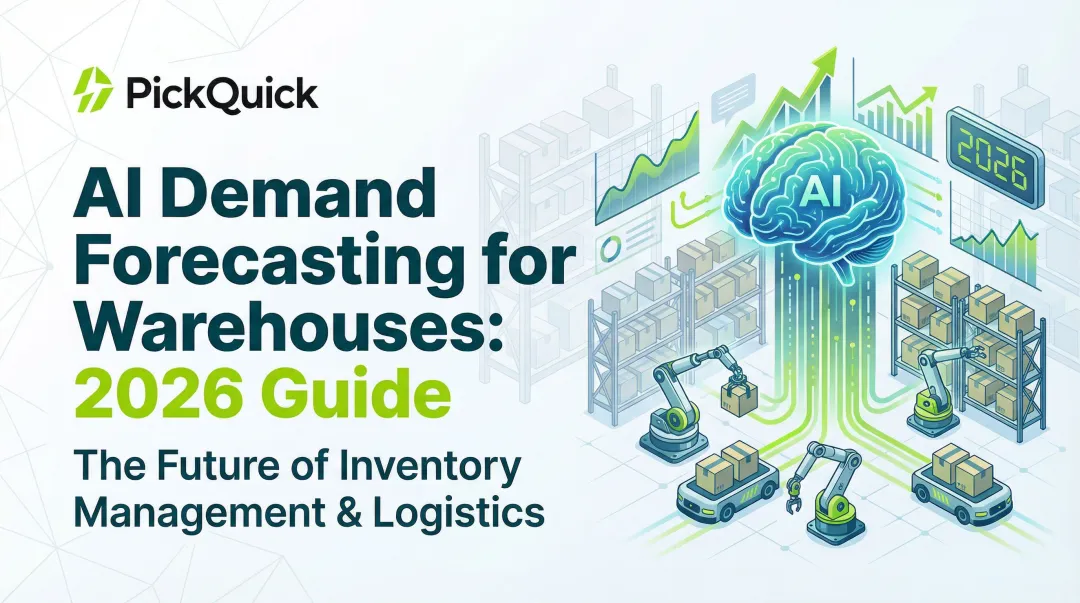
Machine learning algorithms analyze multiple data layers simultaneously—historical sales at the SKU and pincode level, seasonal trends, platform-specific promotions, regional events, and time-of-day demand patterns—to generate accurate predictions of what will sell, where, and when.
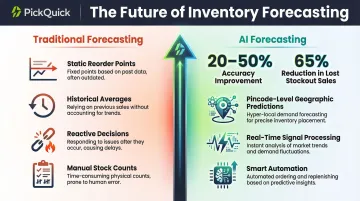
The impact is measurable: AI-driven forecasting improves accuracy by 20-50% compared to traditional methods. In FMCG specifically, it also cuts lost sales from stockouts by up to 65%.
Real-Time Inventory Visibility
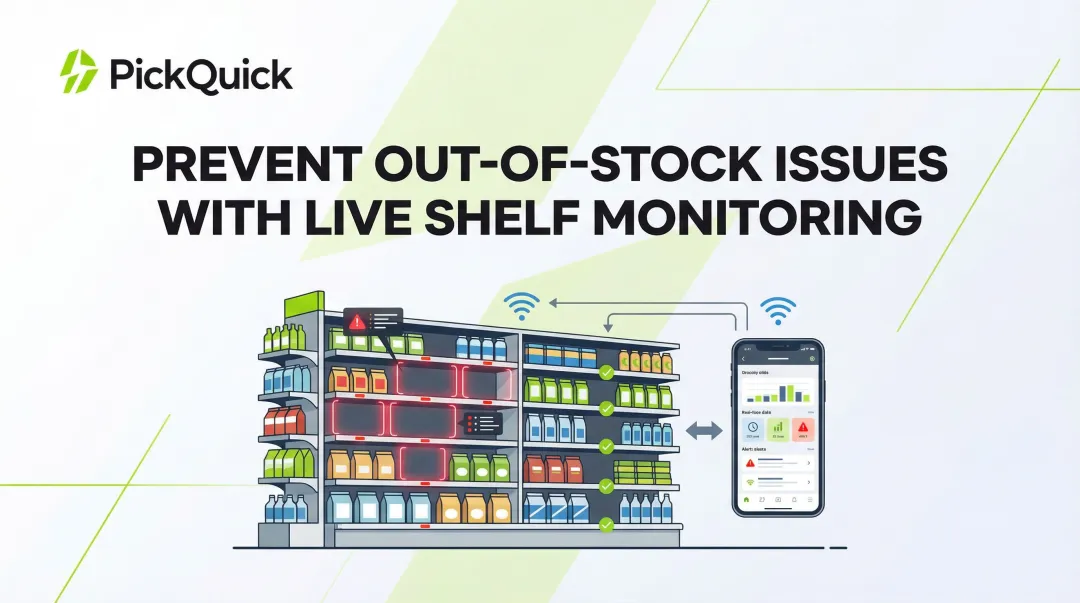
AI systems integrated with platform APIs and IoT-enabled dark store infrastructure continuously track stock levels across all locations and platforms. The result is a unified dashboard view — one place to see exactly what's available, where, and on which platform.
Retailers using RFID technology routinely achieve 95% or better inventory accuracy. Platforms like Blinkit's Brand Central provide keyword search volume, conversion rate data by city, and real-time SKU-level tracking, while Zepto launched Zepto Atom, a paid analytics platform sharing aggregated insights with partner brands.
Automated Replenishment Triggers
AI sets dynamic reorder points (Min-Max thresholds) for each SKU at each dark store location, automatically triggering replenishment orders when stock falls below defined thresholds. This accounts for lead times, supplier reliability, and current demand trajectory rather than using static averages.
The system continuously monitors:
- Store-level availability percentages
- Motherhub (mother warehouse) aging to prevent expiry losses
- Replenishment Order (RO) discipline and speed
- Goods Received Note (GRN) and Discrepancy Note (DN) scores
Anomaly Detection
AI identifies unusual patterns—sudden demand spikes, sales velocity drops, discrepancies between recorded and actual stock—that signal problems requiring intervention. For perishable FMCG categories, where over 30% of perishable goods spoil due to inadequate stock planning, catching these signals early is the difference between a salvageable situation and a write-off.
Scenario Simulation
Advanced AI systems allow brands to model "what if" scenarios—such as a platform promotion, a competitor going out of stock, or a supply chain disruption—and plan inventory buffers accordingly. Instead of scrambling after problems hit, brands can build contingency stock before they do.
How AI Prevents Stockouts Across QC Platforms
Pincode-Level Demand Visibility
Stockouts in quick commerce are often localized—a specific dark store in a specific pincode runs dry while others have surplus. AI enables demand forecasting at the pincode level, so replenishment goes precisely where it's needed rather than spread evenly across all locations.
PickQuick has built pincode-level demand visibility into its quick commerce management model, using real-time data to maintain stable availability metrics for client brands across 10,000+ pincodes.
Dynamic Reordering Tied to Platform Signals
AI connected to Blinkit, Zepto, and other platform data streams detects early warning signs of potential stockouts—such as sudden acceleration in sales velocity or a competitor going out of stock—and adjusts reorder quantities and timelines before shelves actually empty.
On Blinkit, advertising delivery is strictly inventory-led—sponsored products only appear in pin codes where the product is physically stocked. Falling below 80% fill rate consistently triggers algorithmic demotion, which drops search ranking, reduces ad visibility, and can remove listings from active pin codes entirely.
Omnichannel Stock Synchronization
AI prevents the scenario where a brand's inventory is listed as "available" on one platform but the dark store serving it is actually depleted. Real-time synchronization ensures availability signals sent to platforms reflect true on-ground stock, protecting the brand's platform availability rate—a critical ranking metric.
Supplier Lead Time Optimization
Availability synchronization solves the platform-side signal problem — but the upstream supply gap is just as damaging. Traditional distributors typically schedule inventory deliveries on specific days of the week, which often drops to once a week for stores on city outskirts, creating predictable stockout windows.
AI models this lead time variability and builds it directly into reorder triggers, so brands aren't caught in the gap between when stock runs low and when the next batch arrives.
Safety Stock Calibration
AI calculates safety stock dynamically — varying the buffer by SKU, location, and season based on actual demand patterns. The result:
- High-velocity SKUs in dense urban pincodes carry tighter buffers, reducing overstock costs
- Seasonal or weather-sensitive products get automatically elevated buffers before demand spikes
- Slow-moving SKUs on city outskirts are protected against infrequent replenishment cycles
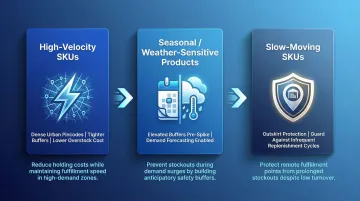
Blanket buffer policies either lock up too much working capital or leave brands exposed during demand surges. Dynamic calibration eliminates both failure modes.
How AI Reduces Overstock in Dark Stores
Smart Inventory Allocation Across Dark Stores
AI analyzes demand data across a network of dark stores to allocate the right quantity of each SKU to the right location. Instead of pushing uniform quantities to all stores, AI directs higher volumes to high-velocity pincodes and reduces allocation to slower-moving ones—preventing inventory pileup in low-demand locations.
AI-enabled Multi-Echelon Inventory Optimization (MEIO) can reduce overall inventory costs by 15–30% across multi-location networks.
Slow-Mover Identification and Early Intervention
AI continuously monitors sales velocity at the SKU level and flags items whose turnover rate is falling below expected levels. This early warning gives brands time to act — through promotions, redistribution, or reduced reorder quantities — well before surplus turns into a write-off.
This is especially critical for perishable categories like dairy or masala products with shelf-life constraints. India-specific post-harvest losses remain high: a 2022 NABCONS study estimated national losses at 6.02–15.05% for fruits and 4.87–11.61% for vegetables.
Markdown and Promotion Optimization
AI recommends the optimal timing and depth of markdowns or promotional pushes for slow-moving SKUs, using price elasticity data and demand trend analysis to clear excess stock without triggering a race to the bottom on price.
Typical corrective actions AI can trigger or recommend include:
- Targeted promotions on high-inventory SKUs in specific pincodes
- Lateral stock redistribution from low-demand to high-demand dark stores
- Markdown depth calibration based on days of supply remaining
- Reorder quantity adjustments before the next procurement cycle
Demand-Driven Purchase Order Management
Overstock often starts at the purchase order stage. AI prevents this by tying order quantities directly to real-time demand signals and projected sell-through rates, instead of defaulting to supplier MOQs or manual estimates — so excess stock never enters the dark store network in the first place.
Key Benefits for FMCG and Regional Brands on Quick Commerce
McKinsey reports that AI reduces supply chain costs by up to 15% through optimized procurement and inventory management. For FMCG brands operating in quick commerce, where availability directly determines platform ranking and revenue, this translates into measurable competitive advantage.
The Compounding Platform Advantage
AI-driven replenishment improves more than just availability—it builds algorithmic visibility on Blinkit and Zepto. Platforms prioritize brands that maintain 95–98% product availability, as low fill rates lead to reduced discoverability and fewer orders.
In-stock consistency earns better search placement, making inventory discipline a direct growth lever. On Blinkit specifically, maintaining a fill rate above 90% is required to progress through their Level system to achieve pan-India dark store distribution.
Operational Efficiency Gains
AI eliminates the operational drag that slows most FMCG teams down — manual monitoring, reactive restocking, and scattered vendor communication. Brands gain:
- Consolidated visibility across all platforms in one dashboard
- Automated alerts replacing WhatsApp groups and phone calls
- Data-driven replenishment decisions replacing manual guesswork
- Predictable inventory flow reducing urgent reordering costs
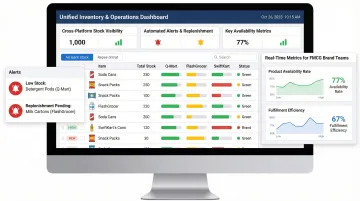
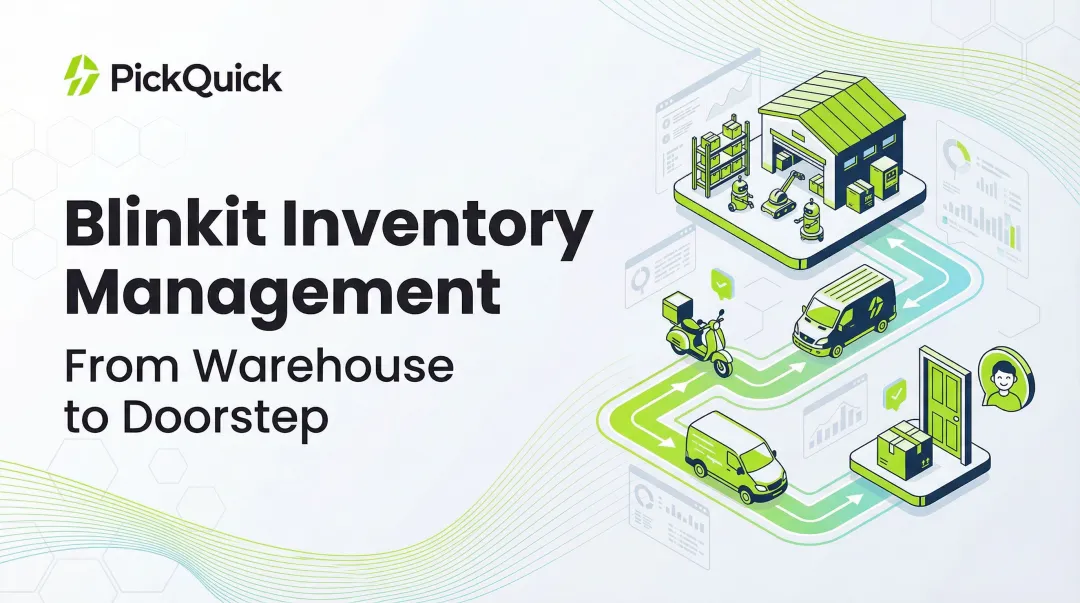
This frees up brand and operations teams to focus on strategy and growth rather than day-to-day stock issues. PickQuick's operator model takes this further — managing the entire motherhub-to-dark-store flow to maintain clean replenishment cycles and zero aging across 25+ category-leading brands.
Frequently Asked Questions
What is AI inventory management in quick commerce?
AI inventory management in quick commerce uses machine learning and real-time data to predict demand, automate replenishment, and maintain optimal stock levels across dark stores on platforms like Blinkit and Zepto. It replaces manual, reactive approaches with decisions that account for hyperlocal demand patterns before problems occur.
How does AI prevent stockouts on platforms like Blinkit and Zepto?
AI monitors sales velocity at the SKU and pincode level, flags stockout risk early, and automatically triggers replenishment before shelves empty. This keeps availability rates high and protects the brand's platform ranking, which directly determines search visibility and advertising eligibility.
What is Min-Max optimization and how does it apply to dark stores?
Min-Max optimization sets a dynamic minimum stock threshold (the reorder trigger) and a maximum stock cap (to prevent overstock) for each SKU at each dark store location. AI adjusts these boundaries based on current demand patterns, supplier lead times, and sales velocity rather than fixed manual settings.
Can regional FMCG brands afford AI-powered inventory management?
Many brands access AI-driven inventory capabilities through quick commerce operators or platform-integrated tools rather than building proprietary systems. This makes these capabilities accessible without large upfront technology investments, especially through full-service platform management partners.
How does AI manage inventory across multiple QC platforms simultaneously?
AI integrates data from all active quick commerce platforms via APIs, creating a unified view of stock levels and demand signals. It then optimizes allocation and replenishment decisions across Blinkit, Zepto, Swiggy Instamart, and JioMart in a coordinated way to prevent platform-specific stockouts or imbalances.
What data does AI need to accurately forecast demand for FMCG brands?
AI demand forecasting draws on historical sales data at the SKU and location level, seasonal and promotional patterns, platform-specific trends, regional consumption behavior, and supplier lead times. Forecast accuracy improves as more historical data accumulates, typically reaching optimal performance after 3-6 months of tracking.