![Best Selling Products on Blinkit: Top Categories & Trends [2026]](https://file-host.link/website/letspickquick-mrnrhk/assets/blog-images/b9b3294f-bf3f-4fca-8037-dc5c6052c0c5/1775598531647310_ea76e0fb45eb49aa860bff1d2c86b1a8/360.webp)
Introduction
Blinkit has reshaped how urban India shops. Its dark-store network and 10-minute delivery model have transformed daily grocery runs into instant, app-driven purchases: milk at 7 AM, chips during an evening Netflix session, masalas grabbed mid-recipe when the dabba runs empty.
With over 50% market share and 1,544 dark stores across 100+ cities, Blinkit now functions as the primary purchase channel for everyday essentials and impulse categories alike. For brands, understanding which categories dominate and what drives those trends is what separates reactive sellers from category leaders on the platform.
This post covers the top-selling categories on Blinkit, the trends shaping demand in 2026, and the product characteristics that consistently drive quick commerce performance.
Key Takeaways
- Dairy, grocery staples, and packaged snacks drive the highest order volumes due to daily consumption and repeat purchase behavior
- Personal care and home essentials lead by product count, fueled by urgent-need buying patterns
- India's quick commerce market reached $6–7 billion in 2024 and is projected to hit $40 billion by 2030
- High-frequency, compact, competitively priced products with consistent dark store availability rank higher in repeat order rates and platform visibility
- Regional brands with strong offline presence convert faster than new launches
Top Selling Categories on Blinkit
Blinkit's best-performing categories share one trait: they fulfill everyday needs quickly. Analysis from MetricsCart's 2025 Blinkit report confirms Personal Care and Home & Office lead by listing volume, while Dairy and Grocery drive order frequency.
Dairy & Beverages
Milk, curd, butter, packaged juices, and soft drinks rank among the most-ordered items on Blinkit. These products drive repeat orders multiple times per week because they're consumed daily and purchased the moment they run out.
Regional dairy cooperatives with strong offline trust (like Nandini and Aavin) translate that brand equity directly to quick commerce. Customers already know these names, search for them by brand, and expect immediate delivery when stock runs low.
Grocery Staples & Masalas
Atta, rice, pulses, cooking oils, and packaged spices form the backbone of Blinkit's repeat-purchase engine. These categories generate consistent order volume because they're restocked on a predictable cycle.
Masala and dry-pantry sub-categories have seen strong growth. MetricsCart found that Whole Farm's Dry Fruits, Masala & Oil sub-category maintained 121-122 products daily on Blinkit during May-June 2025, confirming strong consumer demand. Regional masala brands with niche blends — Maharashtra's thecha, Tamil Nadu's idli podi — capture high-intent searches that national brands can't easily replicate.
Snacks & Packaged Foods
Impulse buying drives this category. Chips, namkeen, biscuits, instant noodles, and chocolates sell consistently because they serve both planned and spontaneous needs—ordered during evenings, while streaming, or when cravings hit.
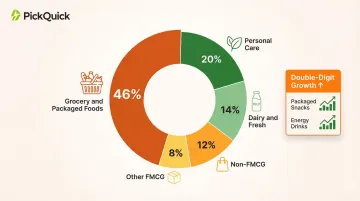
Grocery and packaged foods account for 46% of quick commerce value share, and subcategories like packaged snacks and energy drinks are experiencing double-digit growth.
Personal Care & Household Essentials
Personal Care was Blinkit's largest category by listing count with 2,405 products as of mid-2025. The top-selling items in this category include:
- Soaps, shampoos, and toothpaste (daily-use toiletries)
- Detergents and floor cleaners (household replenishment)
- Sanitary and personal hygiene products
These categories run on "rescue" purchase behavior — customers order the moment they realize stock has run out. For brands, that means shelf availability and dark store stocking directly determine whether a sale is captured or lost to a competitor.
Trending Products on Blinkit in 2026
Beyond evergreen categories, certain products gain momentum due to shifting lifestyles, seasonal patterns, and platform promotions.
Seasonal & Event-Driven Spikes
Quick commerce exhibits extreme demand surges during specific events:
- Summer spikes: Cold drinks, ice cream, and packaged water see dramatic volume increases
- Festive demand: Diwali and New Year's Eve drive snack and sweet purchases
- Resolution cycles: January sees protein snacks and health beverages surge
Event-driven demand is concentrated on the actual day rather than weeks in advance. On New Year's Eve 2024, Blinkit delivered 2.3 lakh packets of aloo bhujia and 6,834 packets of ice cubes by 8 PM.
Health, Wellness & Premium Snacking
Urban consumers are shifting toward better-for-you formats:
- Protein supplements: SKU assortment grew 230% on quick commerce between January 2024 and January 2025
- Healthier alternatives: Sugar-free beverages, organic staples, and protein snacks
- Packaged coconut water: Over 20% of sales now route through quick commerce
For regional brands already strong in beverages or snacks, this shift is opening volume in subcategories that barely existed on quick commerce two years ago.
Ready-to-Cook & Convenience Foods
The health wave feeds directly into convenience: urban professionals want better food, but not a full cook. Demand for ready-to-eat meals, instant mixes, marinated proteins, and semi-cooked items is rising sharply.
- Frozen RTC: Estimated at ~₹3,100 crore on quick commerce, with frozen veg snacks and peas contributing ~40%
- Chilled RTC (batters): Estimated at ~₹3,300 crore, seeing deeper penetration due to shorter shelf life and high purchase frequency
Customers regularly bundle RTC items with staples in the same order — which lifts average order values and benefits brands positioned across both categories.
Non-FMCG & Emerging Categories
Blinkit is actively expanding beyond groceries into electronics accessories, pet care, toys, and home organization. Home & Office ranked as the second-largest category by listing count, with 2,307–2,239 products. For FMCG brands, this matters: as the platform broadens, shelf visibility and search ranking in core categories become more competitive, not less.
What's Driving These Sales Trends
Blinkit's category performance reflects several forces accelerating demand. India's quick commerce market is projected to reach $40 billion by 2030, with annual growth rates exceeding 40%.
Urbanisation and the Convenience Economy
Rising urban density, dual-income households, and time-poor consumers have made 10-minute delivery an expectation, not a luxury. 76% of consumers are now interested in 10-minute delivery, and 73% are willing to pay a premium for speed.
This explains why high-frequency categories—dairy, snacks, household essentials—see outsized quick commerce demand versus traditional grocery. Speed and convenience now rank above price for a growing share of urban shoppers.
Dark Store Infrastructure & Availability
Blinkit's network of 1,544 dark stores across 100+ cities enables instant delivery at scale. This infrastructure benefits products requiring consistent availability—brands with strong replenishment operations win, while stockouts cause visibility loss.
Metro concentration remains high:
- Delhi-NCR — ~400 dark stores
- Bengaluru — ~360 dark stores
- Mumbai — ~250 dark stores
- Chennai — ~190 dark stores
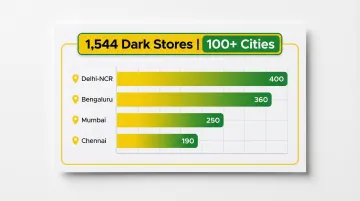
For brands, deeper store density means faster restocking cycles and lower stockout risk — directly impacting search ranking and repeat orders.
Aggressive Discounting & Platform Promotions
Blinkit maintains an average discount of 26% across products, with the 10-20% discount range being most common (covering 3,765 products). Platform-led promotions amplify sales of already high-demand categories.
Brands that build discounting into their margin structure from the start consistently outperform those treating promotions as an afterthought. Promotional readiness is now a baseline requirement, not a growth lever.
Smartphone Adoption & App-First Shopping Behavior
India's smartphone penetration and young urban demographic have made quick commerce apps a primary channel for impulse and top-up purchases. Blinkit downloads increased 165% from January to October 2025, pushing cumulative downloads to nearly 180 million.
App-first shopping behavior drives repeat engagement, with users ordering multiple times per week across categories.
What Makes a Product Ideal for Quick Commerce
Not every product thrives on Blinkit. Certain characteristics predict success.
High Purchase Frequency & Urgency
The two strongest predictors are:
- Multiple purchases per month: Milk, masala, soap, bread
- Immediate need when stock runs out: Toothpaste, cleaning liquids, batteries
These drive the repeat-order and "rescue" purchase patterns that define quick commerce.
Compact Size, Correct Pricing & Availability
Blinkit's dark stores have physical constraints. Compact, properly packaged products with manageable packaging are easier to stock and fulfil.
Mass-market pricing drives higher conversion. The average product price on Blinkit is ₹439, indicating that affordable SKUs dominate.
Availability is critical. Approximately 22% of products were out of stock on average during May-June 2025. Maintaining in-stock status directly impacts visibility—stockouts reduce search ranking and platform trust.
Strong Offline Brand Recognition Translates to Quick Commerce
Brands with existing consumer trust in general trade or modern trade find faster adoption on Blinkit — consumers already search for them by name. In practice, this shapes how dark stores prioritize shelf allocation:
- Regional category leaders get listed faster because demand signals already exist
- Familiar brand names convert at higher rates without paid push on the platform
What These Trends Mean for Brands Entering Blinkit
Understanding what sells is only the starting point. Winning on Blinkit comes down to three things: the right assortment, city-level demand intelligence, and operational execution that keeps products visible and in stock.
Assortment Strategy: Lead with High-Frequency SKUs
Anchor your Blinkit presence in your fastest-moving, most-recognized SKUs before expanding. Brands in masala, dairy, snacks, or personal care fit naturally into Blinkit's top categories. The execution requirement is straightforward: those products need to be visible, priced competitively, and consistently in stock.
Regional brands with ₹5-7 crore/month offline demand already have proven products. The opportunity is converting that existing pull into quick commerce revenue.
City-Level Demand Signals & Expansion Sequencing
Blinkit performance varies sharply by city and pincode. A masala brand with strong pull in Karnataka may see weak initial traction in Delhi NCR. Analyze city-level demand data before committing to market prioritization.
Partnering with an operator like PickQuick, which manages 10,000+ pincodes and holds pre-existing operator rights for regional brands across new cities, cuts expansion timelines from months to weeks.
Operational Readiness: Inventory, Replenishment & Ads
Winning on Blinkit in competitive categories requires three operational commitments:
- High in-stock rates across all active pincodes, with reliable replenishment cadence
- Platform promotion participation to capture demand spikes during high-traffic periods
- Search ad investment to gain visibility in subcategories where shelf space is contested
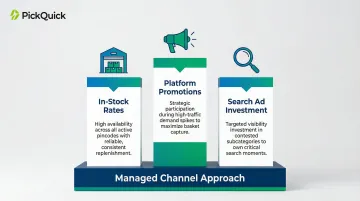
Brands that run Blinkit as a managed channel, with dedicated operational oversight, consistently outperform those treating it as a passive listing.
Frequently Asked Questions
What is the most sold product on Blinkit?
Milk, dairy essentials, packaged snacks, and bread consistently top sales — these are daily-use items customers run out of and need replenished fast, which makes them natural fits for quick commerce's 10-minute delivery model.
What products can I sell on Blinkit?
Eligible categories include groceries, dairy, snacks, beverages, personal care, household essentials, pet supplies, and increasingly electronics accessories. Each SKU must meet Blinkit's packaging and labeling standards before listing is approved.
What categories are growing fastest on Blinkit in 2026?
Health snacks, ready-to-cook foods, and personal care are fast-growing segments, alongside the continued dominance of dairy and grocery staples. Protein supplements and packaged coconut water are seeing particularly strong growth.
How do regional brands perform on Blinkit compared to national brands?
Regional brands with strong offline recognition often convert well on Blinkit—particularly in dairy, masala, and staples—but need city-specific inventory planning and platform-optimized listings to compete with national FMCG players.
How do Blinkit's platform discounts affect brand margins?
Blinkit maintains an average platform discount of approximately 26% across categories. Brands need to factor this into their pricing and margin calculations when planning their quick commerce strategy.
How important is inventory availability for selling on Blinkit?
Consistent in-stock status is critical — stockouts directly reduce a product's search ranking and visibility. Per platform category data, roughly 22% of listed products were out of stock on any given day, meaning brands that stay available capture the orders their competitors lose.